


A second cup from the same grounds is possible, but it won’t taste like the first. If you’re wondering whether you can re-use coffee grounds, you can brew them a second time, preferably the same day unless you dry them. For the fullest flavor, use a fresh batch; reused grounds can make a weaker, sometimes bitter cup.
It’s natural to want to get more from your coffee, especially when the grounds still look usable. The catch is that brewing has already drawn out much of their flavor and caffeine. Reused grounds contain about 3.6–8 mg of caffeine, so a second cup will have less caffeine than one brewed with fresh grounds.
This guide explains when a second brew makes sense, how its taste and caffeine may differ, and how to put spent grounds to use in compost or the garden. You’ll also learn how to store grounds safely and which garden uses call for care.
Key Takeaways
- You can brew used grounds a second time, but the cup may be weaker and less flavorful than one made with fresh grounds.
- A second brew contains about 3.6–8 mg of caffeine, so consider how much caffeine you want before reusing grounds.
- Add used grounds to compost as a nitrogen-rich green material; the U.S. Environmental Protection Agency also says paper filters can go in composting worm bins.
- Use grounds thoughtfully in garden soil: they suit some acid-loving plants, while others may not tolerate acidic conditions.
- For a homemade exfoliating scrub, combine dried grounds with shea butter, coconut oil, brown sugar, and essential oil; choose medium-to-fine grounds for a gentler feel.
1. Can You Make Coffee Twice with the Same Coffee Grounds?
Yes, you can brew used grounds a second time, but fresh grounds make a fuller-flavored cup. Reuse them the same day unless you dry them completely. Brewing extracts flavor and caffeine, so a second brew will taste different.
Before saving grounds for later, dry them thoroughly and store them in a dark place. One method is to spread them out in an oven at its lowest setting for about an hour. Wet grounds left sitting can grow mold and harbor bacteria, so never store them damp. If you see mold or notice an off smell, discard the grounds rather than brewing with them or applying them to your skin.
Used grounds can also go into an exfoliating body scrub. Their texture helps lift surface debris as you massage the mixture over your skin. Choose medium-to-fine grounds, as coarse particles can feel too harsh. Use the scrub on your body rather than assuming a rough texture is suitable for delicate facial skin.
For a simple scrub, combine:
- ½ cup dried coffee grounds
- ½ cup shea butter
- ¼ cup coconut oil
- ¼ cup brown sugar
- 10 drops of essential oil
Stir the ingredients until evenly combined. Shea butter and coconut oil bind the dry ingredients, while brown sugar adds another exfoliating texture. Use dried grounds for this recipe, not wet grounds straight from a coffee filter, to keep excess moisture out of the mixture.
Apply a small amount to damp body skin and massage gently. Rinse it off, and stop if your skin feels irritated. Coffee-ground scrubs can be abrasive, so light pressure matters more than scrubbing for a long time. Avoid coarse grounds, especially on sensitive areas.
For another drink, brew the same grounds again on the day you make your first cup. Expect a lighter extraction, not an identical replacement. If you won’t reuse them that day, dry them completely and store them in a dark place. This gives the grounds another practical use without leaving them damp on the counter.
Texture matters when choosing grounds for a homemade exfoliating scrub. Use medium-to-fine grounds, as coarse particles can feel too harsh on skin. This makes the scrub more suitable for gentle use on the body while retaining the coffee-ground texture. Use dried grounds rather than taking them straight from a wet filter, and stir the ingredients until evenly combined. The recipe uses ½ cup of shea butter and ¼ cup of coconut oil, alongside the other listed ingredients.
Apply a small amount to damp body skin and massage gently rather than pressing hard. Rinse it off afterward, and stop if irritation occurs. Scrubbing harder is not better: light pressure is the safer approach for this recipe. Use fine grounds to avoid the rough feel of coarse particles, and keep the scrub for your body rather than delicate facial skin. These steps let you use spent grounds in a homemade exfoliating mixture while keeping the recipe’s proportions unchanged.
2. Using grounds in compost and garden soil
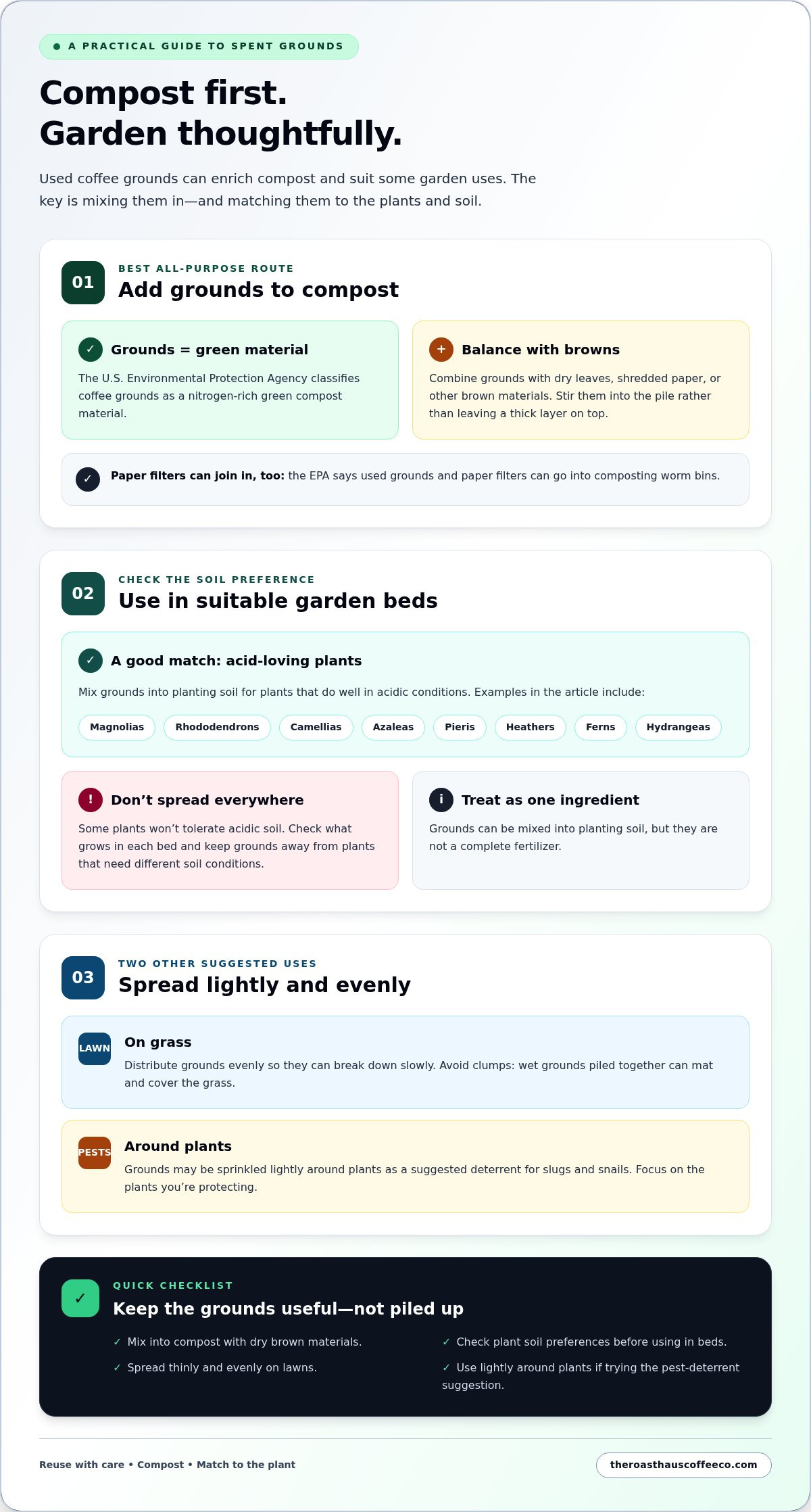
Yes, used coffee grounds can go into compost or garden soil. The U.S. Environmental Protection Agency classifies coffee grounds as green compost material, which supplies nitrogen. Mix them into a compost pile instead of leaving a thick layer on the surface.
For a compost bin, combine grounds with dry leaves, shredded paper, or other brown materials. Add used paper filters too; according to the U.S. Environmental Protection Agency, both grounds and paper filters can be fed to composting worms. Stir the materials together so grounds become part of the pile, not a dense patch.
Grounds can also be used in some garden beds. Mix them into planting soil for plants that do well in acidic conditions, such as magnolias, rhododendrons, camellias, azaleas, pieris, heathers, ferns, and hydrangeas. Treat grounds as one soil ingredient, not a complete fertilizer.
Plant choice matters. Some plants won’t tolerate acidic soil, so don’t spread grounds indiscriminately across every bed. Check what grows in each area and keep grounds away from plants that need different soil conditions. For example, a bed with rhododendrons may suit this use better than a mixed bed with plants that dislike acidity.
Grounds can also be sprinkled around plants as a suggested deterrent for slugs and snails. Apply them lightly and focus on the plants you’re protecting. This doesn’t replace composting: when you’re done using the grounds in the garden, they can still go into the compost pile.
Grass can benefit as the nutrients in grounds break down slowly. On a lawn, distribute them evenly instead of leaving clumps. Wet grounds piled together can mat and cover the grass, while a thin, spread-out layer can mix into the surrounding material.
Try this simple approach: add used grounds to your compost pile, mix them with dry material, then use the finished compost around suitable plants. For direct application, work a modest amount into the planting soil around acid-loving plants such as camellias or heathers. Avoid using grounds on plants that don’t tolerate acidic soil.
To reduce waste at the source, enjoy the grounds from a cup brewed with small-batch roasted coffee, then put them to work in compost or a suitable garden bed.
3. Caffeine in subsequently brewed coffee
Reusing coffee grounds reduces the caffeine in the next brew, but it doesn’t remove it. Typical coffee grounds contain 10-12mg of caffeine, while reused grounds contain 3.6-8mg. Those figures show why a second extraction can still contain caffeine, even after the first cup has already drawn some out.
Hot water extracts caffeine along with coffee’s other soluble compounds. During the first brew, water passes through the grounds and carries some of those compounds into the cup. A second brew uses grounds that have already been extracted once, leaving less caffeine available. The next cup generally contains less caffeine than one brewed with fresh grounds.
The result depends on how the first coffee was brewed and how you prepare the second. Water temperature, contact time, grind size, and water amount all affect extraction. For example, a quick second pour may draw out less than a longer brew. No single caffeine figure applies to every reused batch.
The 3.6-8mg range is useful for understanding the difference, not for calculating the precise caffeine in your mug. The grounds-to-water ratio and brewing method change the amount extracted. A large pot made with reused grounds can also differ from a small cup. Treat the range as a reported amount for reused grounds, not a guaranteed measurement for each serving.
If you’re limiting caffeine, don’t assume a second brew is caffeine-free. Reused grounds still contain caffeine, and a stronger or longer extraction can change how much reaches the cup. Choose fresh decaffeinated coffee when you want to reduce caffeine more deliberately. Reusing regular grounds can make a lower-caffeine brew than using fresh grounds, but it doesn’t make the drink decaf.
For a practical comparison, brew one cup with fresh grounds and another with the same grounds after the first brew. Keep the water amount and brewing method consistent. You’ll taste how the second extraction differs, though taste alone can’t measure caffeine. The listed 3.6-8mg range offers context, while your brewing choices affect the cup itself.
Choose a second brew when a lighter coffee suits you, rather than relying on it to meet a precise caffeine target. The first extraction leaves less caffeine behind, but the remaining amount varies with the grounds and brewing method. If caffeine content matters to your routine, choose coffee based on its stated type and prepare it consistently instead of estimating from reused grounds.
4. Reusing grounds for another cup of coffee
You can brew coffee grounds a second time, but use them the same day unless you dry them completely. The second cup won’t match the strength or flavor of the first. Reuse makes sense when you’re willing to accept a lighter brew, not when you expect a fresh-tasting replacement.
For a same-day second cup, cover the used grounds while you finish your first serving. Then return them to your brewing method and add fresh water. Use the same equipment if convenient, but expect less flavor and caffeine to remain. The amount extracted depends on how you made the first brew and prepare the second.
If you won’t brew again that day, dry the grounds completely and store them in a dark place. You can dry them in an oven at its lowest setting for about an hour. Spread them out for even drying, and store them only once fully dry. This is for later reuse, not a reason to leave wet grounds on the counter.
Are there risks to reusing coffee grounds for food, gardening, or skincare? Wet grounds left sitting can harbor bacteria and may be riskier to consume than fresh grounds. In the garden, use them with plants that tolerate acidic soil. For skincare, choose medium-to-fine grounds because coarse particles can feel too harsh.
Decide how you’ll use a batch before saving it. Grounds meant for another drink should be kept clean and used promptly. Grounds for compost or garden soil don’t need another brew first. If they’ve been sitting damp, don’t treat them as ready-to-drink coffee.
Think of reuse as a choice between a second cup and another useful purpose. If you brew again, do it the same day or dry the grounds completely for later. If the flavor is too weak, put them in compost or suitable garden soil instead. That way, the grounds still serve a purpose without forcing another cup you won’t enjoy.
5. How does reusing coffee grounds affect coffee taste and caffeine?
A second brew from used grounds usually tastes less flavorful than coffee made with fresh grounds, and it may taste bitter. The first brew has already extracted some of the soluble flavor compounds, leaving less for the next cup. This changes the balance of the drink, even if you use the same brewing equipment.
Reused grounds still contain caffeine, but less remains available to extract. Typical grounds contain 10-12mg of caffeine, while reused grounds contain 3.6-8mg. Treat those figures as a general comparison, not a precise reading for your mug. The amount in a serving depends on the grounds and brewing method.
Water and brewing time affect the result. A short second brew may taste faint because water has less time to draw out the remaining compounds. Extending contact time can change the flavor, but it won’t restore compounds removed during the first brew. Grind size and water amount also shape how concentrated the second cup tastes.
Try a simple side-by-side tasting. Brew one cup with fresh grounds and another with grounds used once. Keep the brewing method and water amount consistent, then compare aroma, body, and aftertaste. The fresh cup is a useful reference; the reused cup shows whether its lighter flavor suits you.
Pay attention to bitterness as well as strength. A bitter taste doesn’t necessarily mean the second cup contains more caffeine. Brewing affects both flavor and caffeine extraction, but your palate can’t measure caffeine. A cup that tastes strong or bitter isn’t a reliable guide to its caffeine content.
If you prefer a fuller, more balanced cup, start with fresh grounds. Think of reuse as a way to make a different drink, not reproduce the first cup. You might enjoy the lighter second brew on its own, while choosing fresh grounds when you want a more complete coffee flavor.
For a fair comparison, avoid changing several brewing choices at once. Use the same water, equipment, and serving size for both cups. Note whether the second brew tastes thin, bitter, or simply milder. This practical test helps you decide whether reused grounds suit your taste, without confusing flavor impressions with a measured caffeine amount.
The Roast Haus Coffee: Kenya AA Supreme
The Roast Haus Coffee Co. offers Kenya AA Supreme for readers who want a fresh, full-flavored cup instead of brewing used grounds again. Its beans are roasted to order and shipped within 24 hours of roasting, so you can enjoy coffee made with fresh grounds. For a decaffeinated option, choose Decaf Swiss Water Process. Ethiopia Limu Organic and Honduras Morning Splendeur offer other coffee choices.
Reusing grounds can make a second cup, but it can’t restore the flavor extracted during the first brew. Start with fresh coffee when aroma and a satisfying taste matter most. Visit theroasthauscoffeeco.com to explore the coffee offerings.
Make Your Next Cup a Deliberate Choice
Your next cup can reflect what matters most to you: exploring coffee’s character, choosing a decaffeinated option, or refreshing a familiar daily brew. If you’re deciding whether you can re-use coffee grounds, let taste guide you. Try a second brew if you’re curious, and choose fresh coffee when you want to explore a new cup.
The Roast Haus Coffee Co. offers Kenya AA Supreme, Decaf Swiss Water Process, and Ethiopia Limu Organic. These options give you different directions to explore without asking used grounds to do more than they can. Choose the coffee that fits your next brewing moment, then enjoy it your way.
For help choosing among these offerings, contact The Roast Haus Coffee Co. A thoughtful next cup starts with a choice that suits you.
Frequently Asked Questions
Can You Make Coffee Twice with the Same Coffee Grounds?
Yes, the same batch can brew a second cup. Think of it as a lighter alternative, not an equal-strength refill. It may suit a smaller serving or a coffee drink where milk softens the flavor. Keep the first and second brews separate if you want to compare them. If the second cup tastes unpleasant, save the grounds for compost instead.
What About the Caffeine?
Reused grounds still provide caffeine, but less remains after the first brew. Reused coffee grounds contain about 3.6–8 mg of caffeine, compared with 10–12 mg in typical grounds. Those figures describe grounds, not a guaranteed caffeine amount in each finished cup. Brewing choices affect extraction, so don’t use taste alone to judge caffeine content or treat a second brew as caffeine-free.
Can you reuse coffee grounds to brew coffee again?
Yes. Put the grounds back into your usual brewing setup and add fresh water for a second extraction. Keep the method consistent if you want to compare the result with your first cup. Reuse the grounds the same day, or dry them completely before storing them for later. Don’t brew grounds that have been sitting damp or show signs of mold.
How many times can coffee grounds be reused?
For drinking coffee, brew a batch once for your intended cup, or brew it a second time if you accept a different result. A second brew is the practical limit for another coffee, since the first extraction has already removed flavor and caffeine. After that, put the grounds in compost or use them appropriately in the garden rather than expecting another satisfying cup.
What are practical ways to reuse coffee grounds at home?
Choose a use that suits your household: add grounds to a compost pile, mix them into soil for suitable acid-loving plants, or make a body scrub. The U.S. Environmental Protection Agency classifies coffee grounds as green compost material and says used grounds and paper filters can go to composting worms. Keep grounds away from plants that don’t tolerate acidic soil.
Can coffee grounds be used to deodorize, clean, or exfoliate?
Used grounds can go into a homemade body scrub for exfoliation. Choose medium-to-fine grounds, which are less harsh than coarse particles. Dried grounds can also be placed in a small dish to help absorb household odors. For cleaning, use them only as a mild abrasive on sturdy surfaces, and test an inconspicuous spot first to avoid scratching delicate finishes.

