


Better office coffee starts with the brew basics, not a complicated setup. A practical approach to improving office coffee quality in Seneca, MO is to use fresh, cold, filtered water, freshly ground beans, and a coffee-to-water ratio of 1:15 to 1:18 by weight. Keep brewing water between 195 and 205 degrees Fahrenheit, and serve the coffee fresh instead of leaving it on a warmer.
If workplace coffee tastes flat or bitter, adjusting the beans, grind, water, and daily routine can make a noticeable difference. Thoughtful choices can also make the coffee station more convenient for quick breaks and informal conversations.
This guide covers practical ways to improve brewing, choose coffee and beverage options, and build a routine that fits the workday. It also explains what to consider when planning a better office coffee setup in Seneca.
Key Takeaways
- Use fresh, cold, filtered water and aim for a brewing temperature of 195 to 205 degrees Fahrenheit for better extraction.
- Adjust grind size and measure coffee and water by weight to make each pot more consistent.
- Choose coffee and beverage options that suit different tastes, including a decaf choice for employees who prefer it.
- Keep the coffee station clean and convenient so it supports short breaks and casual team conversations.
- Build a dependable daily routine around fresh coffee, rather than letting brewed coffee sit on a warmer.
How To Improve Your Coffee at the Office?
Start with four key variables: water temperature, grind size, coffee-to-water ratio, and freshness. Then choose a brewing method that suits how employees make coffee throughout the workday.
Brewing Temperature, Grind, Ratio, and Time
Use brewing water between 195 and 205 degrees Fahrenheit, and weigh coffee and water for a repeatable pot. A useful starting ratio is 1 gram of coffee to 16 grams of water, within the broader recommended range of 1:15 to 1:18. For most filter coffee, grind beans to a kosher salt consistency so water can extract flavor evenly.
Brewing time depends on the brewer, grind, and dose, so adjust those together rather than changing several settings at once. During the first 30 to 45 seconds of extraction, gently turn the coffee maker funnel to help distribute water evenly. If a machine offers settings for strength, cup size, and temperature, record a preferred recipe and use it consistently.
Freshly Ground and Freshly Brewed Coffee
Grinding whole beans just before brewing releases volatile aromatics and flavor compounds. Grind only what the next batch needs, then store remaining beans in an airtight container at room temperature. Beans roasted within the past two weeks generally taste fresher than older, stale beans.
Brew batches employees can finish while the coffee is fresh. Leaving brewed coffee on a hot plate can dull its flavor, so avoid keeping it warm for long periods. Before brewing, run water through the machine to wet the filter and warm the carafe.
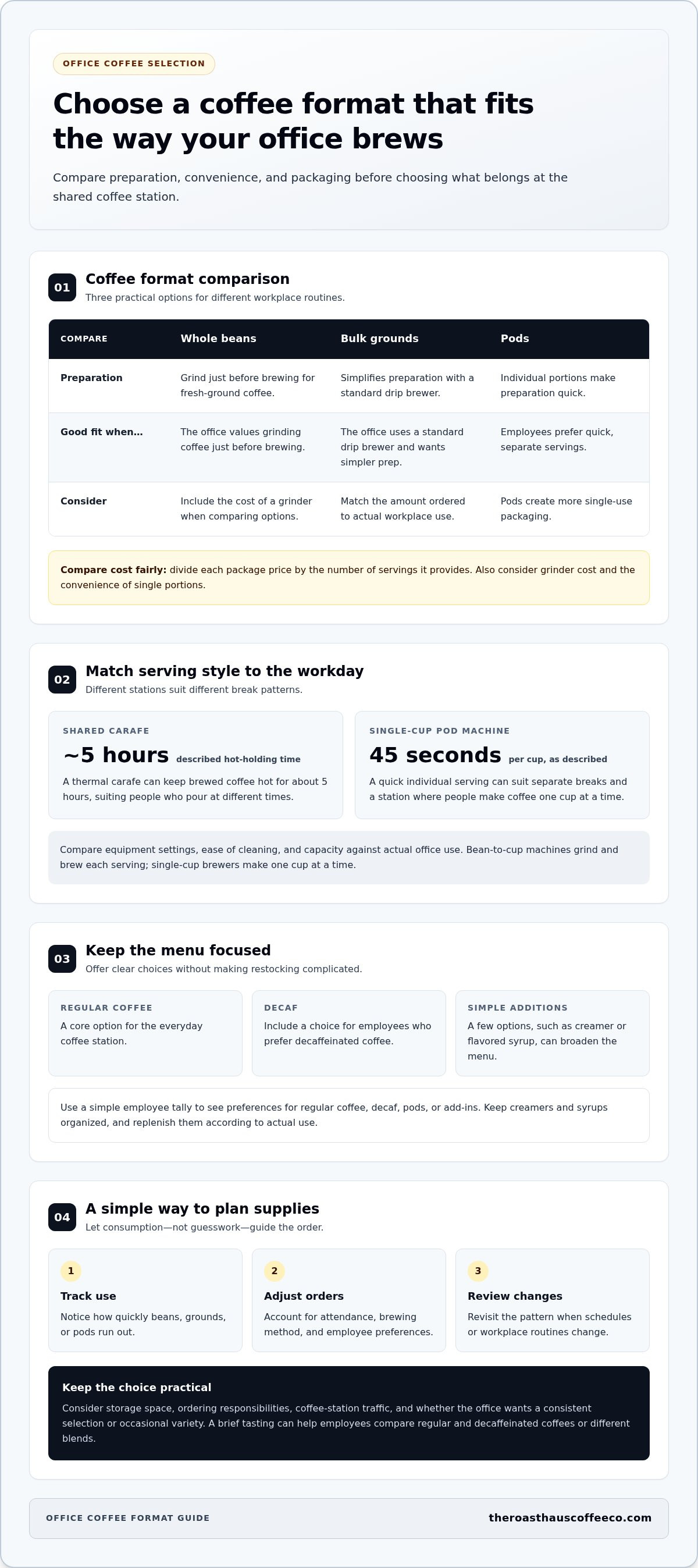
Bean-to-cup machines grind and brew each serving, while single-cup brewers make one cup at a time. A bean-to-cup machine suits a shared station where fresh grinding matters; single-cup brewing can simplify individual servings. Compare settings, ease of cleaning, and capacity against actual office use.
To compare pods, bulk grounds, and whole beans, divide the package price by the number of servings it provides. Include the cost of a grinder and the convenience of single portions, since preparation and packaging affect the overall choice.
For shared station hygiene, wash hands before handling coffee, keep the filter basket, carafe, and surrounding surface clean, and store beans in a sealed container at room temperature. These practices help keep coffee and shared equipment in good condition without making assumptions about special Missouri rules.
For Seneca offices, recurring coffee deliveries or orders based on workplace consumption can help keep supplies on hand. Choose whole beans or grounds to match the office’s brewing method and storage routine.
Rinse the filter basket and carafe after each pot, and clean the shower head as part of routine equipment care. Descale the machine when mineral buildup affects brewing or performance.
Coffee and beverage selection
Build the office menu around how employees drink coffee, rather than offering an unnecessarily long list. A practical starting point is regular coffee, decaf, and a few simple additions, such as creamer or flavored syrup. This provides distinct choices without making restocking complicated.
How much coffee should an office buy per employee each week? Base orders on actual use: track how quickly beans, grounds, or pods run out, then adjust for attendance, brewing method, and employee preferences. Review the pattern when schedules or workplace routines change.
Choose a format that suits the way employees use the coffee station. Whole beans work well when the office values grinding just before brewing, while bulk grounds simplify preparation with a standard drip brewer. Pods provide individual portions and quick preparation, but create more single-use packaging. Different formats can serve different routines, but keep the core menu focused so supplies stay manageable.
Office coffee service plans for Seneca and Joplin workplaces can be structured around recurring deliveries or orders placed as supplies run low. Packages may be tailored to a business’s consumption patterns, with coffee and beverages selected to match its menu. The right arrangement depends on storage space, ordering responsibilities, how often employees drink coffee, and whether the office wants a consistent selection or occasional variety.
Use employee preferences to guide the menu. A simple tally can show whether staff favor regular coffee, decaf, pods, or add-ins. Include a decaffeinated option for those who prefer it. Creamers and syrups can broaden the selection, but keep them organized and replenish them according to actual use.
Some selection details shape the daily experience. A thermal carafe coffee maker can keep brewed coffee hot for about 5 hours, while the described pod machines make a cup in 45 seconds. Those differences matter: a shared carafe suits people who pour at different times, while single-cup brewing can suit separate breaks. Match the format to the station’s traffic and serving habits.
Invite employees to sample options before making a lasting change. A brief tasting can compare regular and decaffeinated coffees or different blends, helping the office settle on a practical rotation. To reduce waste, consider biodegradable pods or compostable and recyclable cups if they suit the workplace’s disposal routine.
Providers can help connect menu choices with equipment that serves them: office coffee providers can supply businesses with beverages and dispensing equipment.
Office coffee providers can offer customizable packages that scale to a business’s consumption patterns. Their menus can include coffee beans and blends, decaffeinated coffee, flavored syrups, and creamers, while taste tests may let businesses sample options in person. Businesses can also look for providers that supply sustainably sourced, Rainforest Alliance-certified coffee.
Workplace amenities and employee satisfaction
A workplace coffee station affects more than what’s in the cup. Employees often work around 8 hours per weekday, so convenient coffee can shape part of their daily experience. A reliable station gives people an option on-site instead of requiring a separate coffee run during the workday.
Frequent off-site coffee runs can interrupt productivity and team coordination. Consider a small office of 10 people: if several employees leave at different times, it can be harder to coordinate coverage or informal discussions. A convenient coffee station helps keep those breaks close to the workplace without treating coffee as a substitute for broader workplace support.
Place the station where employees can reach it without crossing a busy work area, blocking a doorway, or disrupting focused tasks. Keep cups, stirrers, and other everyday supplies together, and make the setup easy to use during a short break. A clear surface and visible supplies reduce small hassles that can make a shared amenity less useful.
A coffee station can give employees an informal place to connect, exchange ideas, or take a brief mental break. Leave enough room for one person to prepare a drink while another waits. Keep conversation space separate from quiet work zones so casual interaction does not disrupt focused tasks.
Use a simple routine to make the coffee station responsive to employee needs:
- Invite employees to share what makes the station convenient or frustrating.
- Assign responsibility for replenishing supplies and keeping the area orderly.
- Review coffee use and refill patterns, then adjust the station’s routine.
- Notice whether employees still leave the workplace regularly for coffee.
Repeated coffee trips outside the office may signal that the on-site option is falling short. Identify the reason before changing the setup. Employees may want better-tasting coffee, easier access, a different selection, or a more reliable supply. Their feedback can show which improvement matters most.
Supply planning supports convenience, too. Regular deliveries, on-demand orders, and proactive equipment maintenance are options businesses can consider when organizing an office coffee program. A clear process for refill requests helps prevent an empty station from becoming a recurring interruption. Set responsibility for monitoring supplies, and use actual consumption patterns to guide replenishment.
Coffee is one part of workplace culture, not a substitute for leadership, compensation, or career growth. Treat the station as a practical amenity: make it easy to use, keep it supplied, and respond to employee feedback. These steps can improve the daily coffee experience while supporting the broader workplace.
Coffee as a daily workday ritual
A coffee routine gives employees a familiar pause in the workday. Morning coffee can mark the start of shared tasks, while an afternoon refill offers a natural reset. Treat these moments as part of the office rhythm, not as interruptions to eliminate.
Make the routine predictable without requiring everyone to take a break at the same time. Keep the station available during morning arrivals, for example, and let employees prepare drinks as their schedules allow. A shared routine works best when it does not delay meetings or leave tasks uncovered.
The coffee station can encourage brief conversations between colleagues. Someone waiting for a cup might exchange an update with a person from another team. Place the station in an accessible common area, away from quiet desks, so informal conversation does not distract employees who need to focus.
Small habits make the routine feel considered. Set a clear place for cups and supplies, and show where used items belong. Rinse the coffee maker after each pot. These steps leave a clean, ready-to-use station for the next person and make shared responsibility part of the routine.
Use employee feedback to shape the routine. Ask whether people prefer coffee before a team check-in or during a natural lull in their work. If employees often leave the office for coffee, find out whether they want a different taste, a more convenient option, or a social break outside the building. The reason points to the change that may help.
Make the routine welcoming to different preferences. Keep decaf easy to identify for employees who want it, alongside regular coffee for those who prefer it. Clear labels help everyone choose without asking someone else to explain the supplies.
Treat the coffee break as a short, flexible pause, not an event everyone must attend. One employee might step away from a screen, while another stays for a quick conversation. This flexibility helps the routine suit different work styles and keeps the station useful throughout the day.
Before changing the setup, observe how employees use it. Notice when people gather, whether the station supports casual conversation, and what causes them to leave. Then make one targeted adjustment, such as moving supplies within reach or clarifying who refreshes the shared area. Small, visible improvements can make the routine easier to maintain.
Coffee is part of many employees’ daily routines, from morning breaks and afternoon refills to informal conversations around the station. These moments can give the workday a familiar thread without becoming formal events. The station is most useful when it stays easy to use: employees can refill a cup, take a brief pause, or exchange a few words, then return to their day. Letting people use it in their own way preserves its everyday value across different work rhythms.
Premium office coffee setups
A well-planned coffee station is defined by reliable use, thoughtful placement, and consistent upkeep, not appearance alone. In a Seneca office, start by noting the station’s location, counter space, nearby water access, and the routes employees take during breaks. These details help determine which setup fits the workplace.
Choose equipment that is easy to clean and suited to the office’s water access. A direct water connection can reduce the need to refill a reservoir, while accessible components make routine cleaning easier. Before choosing a machine, check how staff can reach the filter basket, carafe, and other parts that need regular attention.
Build a short equipment checklist around daily use:
- Confirm the machine’s footprint fits the counter without blocking cups or supplies.
- Look for accessible parts that make cleaning straightforward.
- Match brewing capacity and serving style to the office’s actual coffee routine.
- Place waste and recycling containers near the station when the workplace uses them.
Plan the station as a complete workspace. Keep cups, stirrers, and serving items close to the brewer, with clear counter space for preparation. A machine beside a sink, for example, makes rinsing more convenient, while placing it across a busy walkway may cause congestion. Practical, easy-to-maintain choices are a good starting point for improving office coffee quality in Seneca, MO.
A polished setup also needs a clear cleaning routine. Rinse the coffee maker after each pot, and clean the filter basket, carafe, and shower head. Descale the machine when mineral buildup affects brewing. Choose equipment with parts employees can reach and handle without dismantling the entire station.
Plan for water and supply management before settling on a configuration. A direct water connection may suit a fixed station with suitable access, while a reservoir-based machine offers a different setup. Consider the room layout, who will maintain the equipment, and how the office handles preparation and cleaning. These choices can support improving office coffee quality in Seneca, MO while keeping upkeep manageable.
Premium doesn’t have to mean an elaborate menu or a complicated machine. A clean, thoughtfully arranged station with reliable supplies can serve the workday better than equipment that’s difficult to use. For the coffee itself, explore fresh coffee options for the office as you plan a setup centered on quality and daily use.
The Roast Haus Coffee Co.: Kenya AA Supreme
The Roast Haus Coffee Co. offers Kenya AA Supreme for offices seeking quality whole-bean coffee for their brewing routine. Its roasted-to-order fulfillment supports a fresh starting point: coffee ships within 24 hours of roasting. Grind the beans just before brewing to bring their aroma and flavor into each pot.
For varied preferences, consider Ethiopia Limu Organic, Honduras Morning Splendeur, or Decaf Swiss Water Process alongside Kenya AA Supreme. Offering regular coffee and decaf can make the shared station more useful to employees with different tastes. Choose the coffees that fit your office’s brewing method and daily habits.
Reach out to The Roast Haus Coffee Co. to explore coffee options for your workplace.
Make the Next Cup a Deliberate Choice
Improving office coffee quality in Seneca, MO can start with a simple decision: choose coffee your team will enjoy drinking. Let employee preferences guide the selection, then make it part of a consistent workplace routine. A considered coffee choice can make the shared station feel more welcoming without making it complicated.
The Roast Haus Coffee Co. offers Kenya AA Supreme, Decaf Swiss Water Process, and Ethiopia Limu Organic. These options let an office consider different preferences, from regular coffee to decaf and organic coffee. Choose what suits your workplace and make it the basis of your next order.
Contact The Roast Haus Coffee Co. to explore coffee options for your office. A thoughtful next cup is a practical place to begin.
Frequently Asked Questions
Which coffee beans and roast levels work best for office drip coffee?
Choose coffee to match the flavors employees prefer, then keep the selection consistent. Light roasts tend to have brighter, more delicate flavors; medium roasts offer a balanced profile, while dark roasts taste deeper and more pronounced. To test preferences, brew two options and ask staff which they would choose for everyday drinking. Store beans sealed between uses.
What water filtration and brewing practices improve office coffee flavor?
Use filtered water if tap water has a noticeable chlorine or mineral taste, and replace filter cartridges according to their instructions. Keep the water source consistent while testing coffee so you can trace changes in flavor. If a familiar coffee suddenly tastes different, for example, brew it with freshly filtered water before changing the coffee. This helps separate water quality from other variables.
How do office coffee costs compare for pods, bulk grounds, and whole beans?
Compare package prices with the number of servings to calculate cost per cup. Include the grinder and the convenience of single portions in the comparison, since packaging and preparation also affect the overall choice.

