


You don't have to settle for a cup of coffee that's either aggressively acidic or completely flat. Many specialty drinkers find the intense citrus of popular Ethiopian regions a bit too sharp for a daily brew, while grocery store beans often lose their soul on a shelf for months. If you're looking for a sophisticated middle ground, ethiopian limu coffee is the answer you've been searching for. This specific single-origin is prized for its winey character and balanced body, offering a smooth experience that bridges the gap between floral brightness and deep, cocoa-toned sweetness.
We know that navigating coffee terminology and finding truly fresh, organic beans can be a chore. In this article, you'll discover the rich history of the Limu region and the specific flavor notes that set these beans apart from their neighbors in Sidamo or Yirgacheffe. We'll explain the value of choosing an organic single-origin and provide practical, step-by-step brewing techniques to help you master a café-quality cup in your own kitchen. From understanding the impact of new traceability standards to the benefits of our small-batch roasting process in Wyandotte, Oklahoma, you'll learn exactly why our Ethiopia Limu Organic is the balanced soul of the specialty world.
Key Takeaways
- Understand why ethiopian limu coffee is considered the "balanced soul" of the region, offering a sophisticated profile that sits perfectly between intense floral and deep cocoa notes.
- Learn how the wet-processing method defines this bean's signature winey acidity and clean finish, making it a favorite for those who find other Ethiopian varieties too sharp.
- Compare Limu to Yirgacheffe and Sidamo to identify which specific Ethiopian profile best suits your personal palate and daily routine.
- Master the precise brewing variables, such as maintaining water temperatures between 195°F and 205°F, to extract the full spectrum of aromatics from high-altitude beans.
- Discover why small-batch, roasted-to-order fulfillment for our Ethiopia Limu Organic is the only way to ensure these delicate flavor notes reach your cup before they degas.
What is Ethiopian Limu Coffee? Understanding the Origin
The Terroir: Altitude and Environment
The quality of these beans starts with the land. Most Limu coffee grows at altitudes ranging from 1,800 to 2,000 meters above sea level (masl). This high elevation is critical for flavor development. It forces the coffee cherries to grow more slowly, which results in a denser, harder bean packed with concentrated sugars. This density is what allows the coffee to withstand the heat of a roaster while maintaining its unique aromatics.
The environment is largely forest-grown or semi-forest-grown. This means the coffee trees thrive under a canopy of natural shade, which preserves moisture in the rich volcanic soil of the Limu plateau. This natural ecosystem is why our Ethiopia Limu Organic maintains such a complex, clean flavor without the need for intensive synthetic interventions. It's a sustainable way to produce coffee that respects the local biodiversity.
History of the Limu Region
Historically, the region was known for its vast wild coffee forests. Over time, production transitioned from these wild harvests to organized smallholder cooperatives. This shift was vital for quality control and consistency. In the past, coffee from this area was sometimes lumped in with Djimmah beans, which were often processed naturally and had a more rustic, earthy taste. The development of modern washing stations in Limu changed that narrative. It allowed farmers to produce a much cleaner and more refined cup that highlights the bean's natural sweetness.
The broader context of Coffee Production in Ethiopia shows how regional branding has helped farmers earn better prices for their specific harvests. Within the national hierarchy, the Limu region stands as a premier source of washed specialty coffee that prioritizes balance and clarity over aggressive intensity. It remains a cornerstone of the country's reputation for world-class beans.
The Processing and Flavor Profile of Limu Coffee
The way we process ethiopian limu coffee is the secret to its refined character. Most beans from this region undergo the washed, or wet, process. This involves removing the fruit pulp before the beans are dried on raised beds. This method strips away the heavy, fermented fruit notes often found in natural coffees, leaving behind a profile that is remarkably clean. One of the most sought-after traits here is the winey mouthfeel. It's a crisp, bright sensation on the tongue that mimics the acidity of a dry white wine. It provides a sophisticated structure to the cup without feeling overly heavy or oily.
The integrity of these flavors is tied directly to the land. Scientific research into Ethiopian Coffee Land-race Potentials shows that regional varieties have unique genetic markers that determine their aromatic complexity. When these beans are grown organically, they develop without the interference of synthetic chemicals. This purity allows the natural stone fruit and citrus notes to shine through. If you want to taste this clarity for yourself, our Ethiopia Limu Organic is roasted to order to ensure these delicate flavor compounds remain intact.
Sensory Notes: What to Expect in the Cup
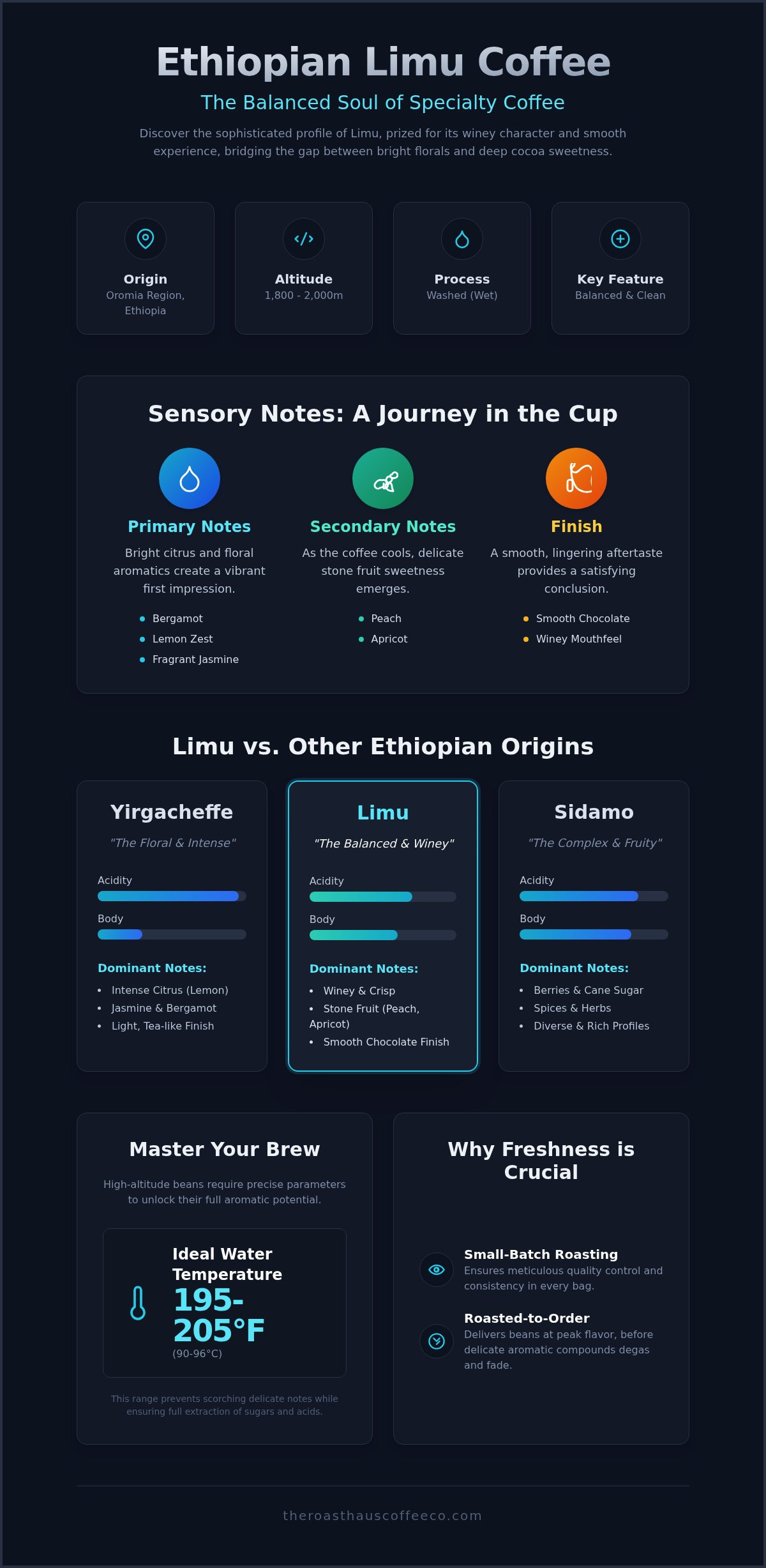
When you take your first sip, you'll likely notice a bright citrus foundation. The complexity of this bean is best experienced as it transitions through different temperatures during your brew. Here is a breakdown of what to look for:
- Primary Notes: Bergamot, lemon zest, and fragrant jasmine.
- Secondary Notes: Stone fruits like peach and apricot.
- Finish: A smooth, lingering chocolate aftertaste.
In a medium roast, the natural sugars caramelize just enough to offset the acidity. This creates a harmonious experience that works well at any time of day, whether you're starting your morning or enjoying an afternoon break. The balance between sweetness and acidity is the hallmark of a well-roasted Limu bean.
Washed vs. Natural Processing
The choice to use wet processing is intentional. In other parts of Ethiopia, natural processing is common, where the cherry dries whole around the bean. While that creates a berry-like sweetness, it can sometimes mask the bean's true personality with a "funky" edge. Washing the beans emphasizes clarity and a tea-like body. The fermentation stage is critical here. Producers use clean water to soak the beans, which gently breaks down the remaining mucilage. This controlled environment ensures that the floral and citrus characteristics are highlighted rather than buried under heavy fruit fermentation. It’s a labor-intensive process, but it’s the only way to achieve the precision that specialty coffee lovers expect from Limu.
Limu vs. Yirgacheffe vs. Sidamo: The Comparison
Ethiopia isn't a one-note producer. Each region brings a unique perspective to the table, but they aren't interchangeable. While Yirgacheffe and Sidamo often dominate the conversation, ethiopian limu coffee offers a distinct alternative for those who find other beans too intense or too light. Understanding these differences helps you explore the diverse range of coffee beans available and find a profile that actually fits your daily routine.
Acidity and Body Comparison
The sensory experience across these three regions varies significantly. Yirgacheffe is famous for its sharp, citric acidity and a body so light it feels like tea. It's an excellent choice for a slow afternoon sip, but it can feel thin in the morning. Sidamo, especially when naturally processed, leans toward a heavy body with deep berry and earthy tones. It's often the boldest of the bunch.
Limu sits comfortably in the middle. It features a mellow, winey acidity that provides brightness without the "bite" found in Yirgacheffe. Its medium body gives it a smooth mouthfeel that feels substantial. If you enjoy adding a splash of milk or cream, Limu is the superior choice. Its cocoa finish and structured body hold up well against dairy, whereas Yirgacheffe’s delicate floral notes are easily drowned out.
Selecting the Right Origin for Your Palate
Your choice depends on what you value in a cup. If you love the fragrance of jasmine but want a coffee that feels more like a traditional brew and less like a botanical infusion, Limu is your best bet. It retains the classic Ethiopian brightness but adds a layer of sweetness and cocoa that makes it incredibly versatile.
Roast levels also impact these beans differently. We find that a medium roast is the sweet spot for Limu. It allows the stone fruit notes to develop without losing the winey acidity. Yirgacheffe is almost always best as a light roast to preserve its perfume. Sidamo can handle darker roasts that emphasize its jammy sweetness. Choosing Limu means you're prioritizing balance over extremes.
| Flavor Metric | Limu | Yirgacheffe | Sidamo |
|---|---|---|---|
| Acidity Type | Winey and Mellow | Sharp and Citric | Tart and Berry-like |
| Body | Medium and Smooth | Light and Tea-like | Medium to Heavy |
| Primary Notes | Cocoa, Stone Fruit | Jasmine, Lemon | Blueberry, Earthy |
| Sweetness | Caramel and Honey | Delicate Sugar | Jammy and Rich |
Brewing Guide: How to Highlight Limu's Profile
High-altitude beans are dense and stubborn. Because ethiopian limu coffee grows between 1,800 and 2,000 meters, it requires specific heat to unlock its sugars. You should aim for a water temperature between 195°F and 205°F. If your water is too cool, you'll end up with a sour, under-extracted cup. If it's too hot, you risk burning the delicate floral notes we work so hard to preserve during our roasting process. For a solid foundation on these variables, check out our guide on how to make coffee.
The Pour-Over Method (V60 or Chemex)
The pour-over method is the best way to experience the tea-like clarity of this bean. Use a 1:16 coffee-to-water ratio. For example, 20 grams of coffee to 320 grams of water works perfectly. Start with a 45-second bloom. This is especially important for our Ethiopia Limu Organic because we ship within 24 hours of roasting. The beans are still degassing, and that initial pour allows the CO2 to escape so the water can actually penetrate the grounds. This technique highlights the bergamot and lemon zest aromatics.
French Press: A Winey, Full-Bodied Approach
French Press brewing offers a different experience. While many people think immersion is only for dark, earthy beans, Limu stands up remarkably well to this method. Use a coarse grind, but ensure it's consistent to avoid muddying the cup. A four-minute steep brings out the heavier cocoa and stone fruit notes. It transforms the winey acidity into a rich, juicy mouthfeel that feels substantial without being bitter. It's a great way to enjoy a more "soulful" version of this single-origin.
Espresso: Limu as a Bright Single-Origin Shot
Using ethiopian limu coffee for espresso is a bold choice. It creates a bright, vibrant shot that can be quite intense. To manage the high acidity, try a slightly longer pull or a finer grind to increase extraction time. If you're new to this, our guide on espresso basics can help you dial in your machine. A straight shot will be punchy and citrus-forward. In a 6oz flat white, the milk softens the lemon notes into a creamy, lemon-curd sweetness.
Ready to test your skills? Order a bag of our Ethiopia Limu Organic and experience the difference that fresh-roasted quality makes in your morning routine.
Why Freshness Matters: The Roast Haus Ethiopia Limu Organic
The aromatics of ethiopian limu coffee are fragile. Once the roasting process ends, the beans begin to degas, releasing carbon dioxide and carrying away the volatile oils that create those bergamot and jasmine notes. If you buy coffee from a grocery store shelf, those oils are likely gone. We handle things differently at The Roast Haus Coffee Co. We roast in small batches at our family-owned facility in Wyandotte, Oklahoma. This isn't a massive industrial operation; it's a craft we've refined since 2014. Our focus remains on the quality and integrity of every single batch we produce.
Our fulfillment model is our biggest differentiator. While many retailers ship beans that have been sitting for a week or more, we ship within 24 hours of roasting. This ensures you receive the bean at its peak. You get to experience the full winey acidity and stone fruit sweetness that we've discussed in previous sections. When you support us, you aren't just getting world-class coffee; you're supporting a local, independent business that values quality over volume. We take pride in our identity as a personal venture that prioritizes your experience.
Our Ethiopia Limu Organic Sourcing
Choosing organic isn't just about health; it's about flavor purity. Pesticides and synthetic fertilizers can alter the chemical makeup of the soil, which eventually impacts the bean's complexity. By sourcing Ethiopia Limu Organic, we ensure that the natural land-race potential of the plant is preserved. We select specific lots based on flavor consistency to make sure every bag meets our high standards for sensory excellence.
Our "Roasted-to-Order" promise means your coffee doesn't exist until you buy it. We don't keep inventory sitting around in a warehouse. This bespoke approach allows us to maintain the integrity of the bean from the moment it leaves the cooling tray to the moment it arrives at your door. It's the only way to guarantee that the volatile oils remain intact for your morning brew.
Join the Roast Haus Community
You can make these fresh deliveries a regular part of your routine. We offer a coffee subscription that brings your favorite origins directly to your doorstep on your schedule. It's the easiest way to ensure you never run out of peak-fresh beans. For our local Oklahoma customers, we also offer convenient pickup options at our Wyandotte roastery. We love seeing our community and sharing our passion for craft coffee in person.
We're confident in our product and transparent about our process. We want you to have the best possible experience with every cup you brew at home. Stop settling for stale, impersonal coffee from large corporations. Experience the balance of Ethiopia Limu Organic today and taste what happens when true craftsmanship meets fresh-roasting.
Elevate Your Daily Ritual with Balanced Ethiopian Flavor
Ethiopian limu coffee offers a rare combination of winey acidity and smooth cocoa tones that you won't find in mass-produced beans. You've learned how the high-altitude terroir of the Oromia region creates a dense bean capable of producing a complex, tea-like cup. By choosing an organic single-origin and mastering precise brewing temperatures, you can enjoy a café-quality experience at your own kitchen table.
The key to capturing these delicate aromatics is freshness. At The Roast Haus Coffee Co., we don't let our beans sit on a warehouse shelf. We're a family-owned roastery in Wyandotte, Oklahoma, dedicated to artisan small-batch production. Every order of our 100% organic certified beans is roasted-to-order and shipped within 24 hours. This commitment ensures that the volatile oils and vibrant flavors reach you at their absolute peak. It's our way of honoring the craftsmanship behind every harvest.
Don't settle for stale, over-acidic coffee any longer. Support an independent business and taste the difference that true dedication makes. Order your fresh-roasted Ethiopia Limu Organic beans here and discover the balanced soul of Ethiopia in every sip. We can't wait for you to experience your new favorite brew.
Frequently Asked Questions
Is Ethiopian Limu coffee acidic?
Ethiopian limu coffee features a bright, winey acidity that provides a crisp sensation on the tongue. It isn't as sharp or citric as Yirgacheffe, which makes it an excellent choice for drinkers who want brightness without an aggressive bite. This balanced acidity is a hallmark of the Limu region. It pairs perfectly with the bean's natural cocoa and stone fruit notes to create a structured, clean cup that feels sophisticated rather than overwhelming.
What is the best roast level for Ethiopia Limu Organic?
We recommend a medium roast for our Ethiopia Limu Organic to achieve the perfect balance of flavors. A light roast might emphasize the floral aromatics but leave the body feeling thin. Conversely, a dark roast can mask the delicate winey notes with smoky char. A precise medium roast caramelizes the natural sugars just enough to highlight the peach and apricot characteristics while maintaining the bean's signature clean, tea-like finish that our customers love.
How much caffeine is in a cup of Ethiopian Limu coffee?
A standard eight-ounce cup of brewed Ethiopia Limu Organic contains approximately 95 to 100 milligrams of caffeine. This is typical for high-quality Arabica beans grown at high altitudes. While the caffeine content is standard, the clean finish and lack of bitter oils often make the energy boost feel smoother. Keep in mind that your brewing method and coffee-to-water ratio will ultimately determine the exact caffeine concentration in your final mug.
Is Limu coffee better than Yirgacheffe?
"Better" is subjective in the specialty coffee world. Yirgacheffe is famous for its intense floral perfume and light, tea-like body. If you prefer a more balanced experience with a medium body and chocolatey undertones, ethiopian limu coffee is the superior choice. It offers more versatility for those who add milk or cream. While Yirgacheffe is a botanical adventure, Limu provides a grounded, winey profile that many find more suitable for a daily morning routine.
Is the Ethiopia Limu Organic coffee Fair Trade?
Our Ethiopia Limu Organic is sourced with a deep focus on quality and integrity. While we prioritize the organic certification to ensure soil health and flavor purity, we also support the smallholder cooperatives that make this coffee possible. We believe in the value of independent business and ethical sourcing. Our commitment to artisan small-batch production means we pay close attention to the origins of our beans, ensuring they meet our high standards for both craftsmanship and ethics.
What happens if I use Limu coffee for cold brew?
Using Limu for cold brew results in a remarkably smooth and refreshing beverage. The long, cold extraction process mutes the winey acidity and emphasizes the stone fruit and cocoa sweetness. You'll end up with a cup that has a silky mouthfeel and zero bitterness. It's a great way to enjoy the complexity of these beans during the summer months. We recommend a coarse grind and a 12 to 24 hour steep for the best results.
Can I buy Ethiopia Limu coffee in bulk for my office?
Yes, we offer bulk options for businesses and offices that want to provide high-quality beans for their teams. We understand that a good cup of coffee can transform an office environment. Our Ethiopia Limu Organic is a crowd-pleaser because of its balanced profile. Since we roast-to-order and ship within 24 hours, your office will always have peak-fresh coffee. Contact us directly at our Wyandotte roastery to discuss bulk volumes and recurring delivery schedules tailored to your needs.

