


Why does your expensive espresso machine still produce shots that taste like battery acid or burnt rubber? It isn't a calibration issue or a lack of skill. The truth is that the best coffee beans for espresso aren't found on a supermarket shelf, even if the bag has a premium label. Most beans sold in big-box stores were roasted months ago and lost their volatile oils before they ever reached your kitchen. With global coffee prices hitting record highs in July 2026, you can't afford to waste money on stale inventory that lacks flavor.
It's frustrating to invest in high-end gear only to end up with a bitter, thin mess in your cup. We believe you deserve a better morning ritual that honors the craft of the roast. This guide will show you how to select beans based on roast dates, origin stories, and flavor profiles that actually work for home brewing. We'll break down the difference between light and dark roasts while teaching you how to read a coffee bag like an expert. You'll discover how to source fresh, small-batch beans that guarantee a thick, syrupy crema and a balanced shot every single morning.
Key Takeaways
- Understand why bean density matters for 9-bar pressure extractions and how it prevents sour or bitter shots.
- Stop settling for stale supermarket bags and learn why a recent roast date is the secret to finding the best coffee beans for espresso.
- Identify whether you prefer traditional chocolate notes or modern fruity profiles to narrow down your search for the perfect bean.
- Use our practical checklist to decode coffee labels, focusing on processing methods and specific roast dates rather than vague expiration windows.
- Discover how small-batch, roasted-to-order fulfillment ensures your beans arrive at peak flavor for a professional-grade home experience.
What Actually Makes a Coffee Bean Good for Espresso?
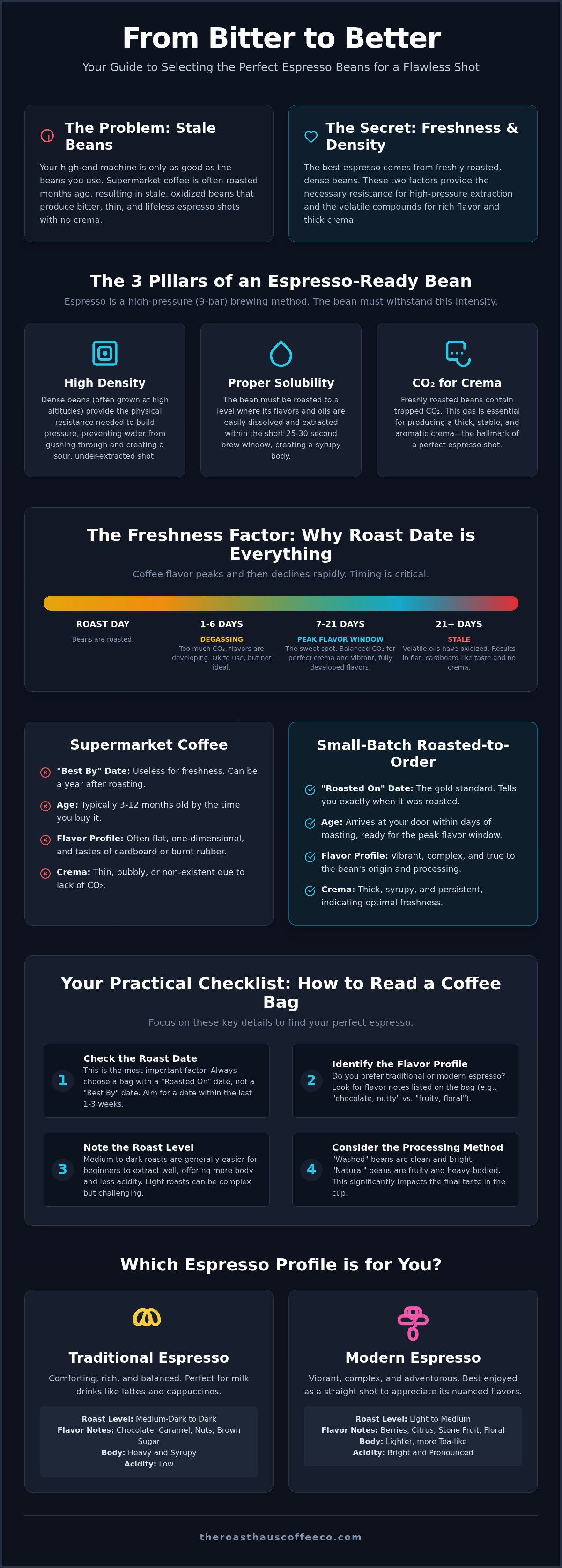
To understand the best coffee beans for espresso, you must first understand the physical stress of the brewing process. Espresso isn't just a type of bean. It's a high-pressure extraction method that forces hot water through a tightly packed bed of finely ground coffee. Most home machines operate at roughly 9 bars of pressure. This intense environment requires a bean with specific structural integrity. If a bean is too soft or lacks density, the water will blast through it too quickly, leaving you with a sour, thin mess.
To produce a balanced shot, your coffee must meet these physical standards:
- High Density: Dense beans provide the resistance needed to build pressure.
- Solubility: The bean must be roasted enough to release its oils and flavors in seconds.
- Gas Content: Freshly roasted beans contain the carbon dioxide required for crema.
Espresso Roast vs. Regular Coffee
The label "Espresso Roast" on a bag is often just a marketing suggestion. It usually indicates that the roaster developed the beans longer to reduce sharp acidity and increase the body. While you can technically use any bean, darker roasts are more porous. This makes it easier for water to extract flavor during the short 25 to 30 second brew window. By definition, espresso is a concentrated beverage with a 1:2 ratio of dry grounds to liquid coffee. If you want to dive deeper into the history and mechanics of this method, you can read more about What is Espresso? on Wikipedia.
The Role of Oil and Density
Physical properties dictate how your machine behaves. High-altitude beans, like our Kenya AA Supreme, are naturally denser. This density creates the necessary resistance in your portafilter basket, allowing the pressure to build. Soluble solids are forced out of these dense beans, creating that heavy, syrupy mouthfeel enthusiasts crave. Be careful with extremely oily beans. While oils contribute to flavor, they can clog the grinders in super-automatic machines and leave a rancid residue over time.
Freshness is the final piece of the puzzle. When we roast small batches in Wyandotte, we preserve the carbon dioxide trapped inside the bean. This gas is essential. Without it, you won't get a rich, thick crema, no matter how expensive your grinder is. Selecting the best coffee beans for espresso means looking past the brand name and focusing on the physical reality of the bean's structure and roast date.
The Freshness Factor: Why Roast Date Trumps Brand Name
Coffee is a perishable agricultural product. It is more like a loaf of fresh bread than a pantry staple. Once the roasting process ends, the beans begin to oxidize immediately. This chemical reaction is the primary enemy of flavor. When you use stale beans, you lose the volatile aromatic compounds that define a great shot. The result is a thin extraction with zero crema and a flat, cardboard-like taste. Even the best coffee beans for espresso will fail if they have been sitting in a warehouse for months.
Timing dictates your success at the portafilter. Espresso beans need a short period to "degas" or release excess carbon dioxide, but there is a clear peak for quality. Most roasts hit their sweet spot between 7 and 21 days after leaving the roaster. During this window, the flavors are vibrant and the gas levels are ideal for creating a thick, honey-like texture. Mastering expert espresso extraction techniques starts with acknowledging that your raw material's age determines your results. With certified Arabica stocks falling by 30% in 2026, every bean you buy is a valuable investment that shouldn't be wasted on stale inventory.
The Problem with Supermarket Espresso
Big-box retailers prioritize shelf life over sensory excellence. You will typically see a "Best By" date on these bags, which roasters often set for a year in the future. This date is useless for a home barista. It tells you nothing about when the coffee was actually roasted. Some brands use nitrogen flushing to slow down staling, but this is a poor substitute for true, small-batch freshness. To understand the fundamental difference in quality, read our guide on What is Roasted-to-Order Coffee? Why it Matters. Small-scale roasters offer a level of transparency that mass-market corporations cannot match.
The Roast Haus 24-Hour Promise
We take a different approach in Wyandotte, Oklahoma. As a family-owned roastery, we don't keep roasted inventory sitting in bins. We roast your beans only after you place your order. This artisan process ensures the clock only starts ticking when the package is in your name. We ship within 24 hours of roasting. This speed puts you in total control of the degassing period. By the time the package arrives, the beans are entering their peak flavor window. When you choose the best coffee beans for espresso from a source that values timing, you eliminate the guesswork from your routine. If you want to experience the difference that bespoke fulfillment makes, browse our freshly roasted espresso beans today.
Choosing Your Flavor Profile: Traditional vs. Modern Espresso
Finding the best coffee beans for espresso depends entirely on how you intend to drink your shot. Traditional espresso is designed for comfort and consistency. It leans into deep chocolate, caramel, and toasted nut notes. Modern espresso, however, prioritizes the "Third Wave" philosophy of transparency and origin-specific flavor. Both require a careful balance of bitterness, acidity, and sweetness that must be achieved within a narrow 30-second extraction window.
Classic Blends and Darker Roasts
Medium-dark roasts remain the gold standard for milk-based drinks like lattes and cappuccinos. The roasting process facilitates the Maillard reaction, which is the same chemical magic that turns bread into toast. This creates the "bready" sweetness and dark cocoa notes that pair perfectly with dairy. It's vital to remember that espresso differs from standard drip coffee because the high-pressure extraction concentrates these flavors. A lighter roast might get lost in a large latte, but a darker roast provides the punchy body needed to stand out.
Single-Origin Espresso: A Gourmet Adventure
If you drink your coffee black, single-origin beans offer a more complex journey. These beans aren't blended for consistency. They're selected to highlight a specific farm or region. For example, our Kenya AA Supreme is a high-altitude bean that produces a bright, wine-like espresso with intense fruit notes. If you enjoy a floral profile, our Ethiopia Limu Organic shines in an Americano, offering delicate citrus and jasmine layers. These coffees are often graded by the Specialty Coffee Association (SCA) to ensure they meet the rigorous quality standards required for specialty brewing.
These lighter, modern roasts are notoriously difficult to "dial in." They possess higher acidity that can easily turn sour if your water temperature or grind size is off. While challenging, the reward is a cup that tastes like a specific place and time rather than just a generic roast. Choosing the best coffee beans for espresso often means deciding whether you want the reliable comfort of a dark blend or the vibrant complexity of a single-origin adventure.
Practical Checklist for Buying Espresso Beans
Buying the best coffee beans for espresso requires more than just picking a bag with a nice design. You need to look for specific markers of quality that tell you how the coffee will behave under pressure. Use this checklist to ensure you are getting the highest standard of beans for your home setup.
- Roast Date: Never buy a bag that only lists an expiration date. You want to see a "Roasted On" date within the last 14 days. Freshness is the most critical variable you can control.
- Processing Method: Washed coffees like our Honduras Morning Splendeur offer a clean, crisp cup with high clarity. Natural process coffees are dried with the fruit intact. This results in a heavier body and intense fruit sweetness.
- Altitude: High-grown beans develop more slowly in thinner air. This makes them denser and more resilient during a 9-bar extraction. Our Kenya AA Supreme is a prime example of a high-altitude bean that holds its structure under stress.
- Equipment Check: Match the roast to your machine. Entry-level machines with pressurized baskets often struggle with light roasts. They perform much better with medium-dark roasts that are easier to extract.
Understanding Coffee Bag Terminology
Single-origin coffee comes from one specific farm or region. It offers a unique "terroir" that tells a story of its environment. Blends are crafted for consistency. Roasters combine different beans to create a specific flavor profile that stays the same year-round. When you see tasting notes like "dark chocolate" or "stone fruit," remember these are descriptors of the natural flavor. No fruit or chocolate was added during the process. For a deeper dive into these terms, check out our beginner guide to choosing coffee beans.
Decaf Espresso: No Compromise on Crema
Many people believe decaf can't produce a good espresso shot. This is only true for low-quality beans processed with harsh chemicals. Our Decaf Swiss Water Process uses only water, temperature, and time to remove caffeine. This gentle method preserves the essential oils and cellular structure of the bean. You can still achieve a beautiful, thick crema with decaf. Just remember that decaf beans are often more brittle after processing. You will likely need to adjust your grinder to a slightly finer setting to maintain the correct flow rate. If you are ready to upgrade your morning routine, order your fresh small-batch beans from our latest roast.
The Best Roast Haus Beans for Your Espresso Machine
Finding the best coffee beans for espresso is a personal journey that ends at your portafilter. At The Roast Haus, we've curated a selection of single-origin beans that cater to different palates and brewing styles. Because we roast every bag to order in Wyandotte, Oklahoma, you receive the maximum flavor potential of these premium crops. Our family-owned approach ensures that the quality and integrity of the bean are preserved from the roaster to your doorstep.
- Kenya AA Supreme: This is the choice for baristas who want a bold, high-altitude experience. These dense beans withstand high pressure and deliver deep complexity with a wine-like finish. It's a premium option for those who enjoy a heavy, syrupy body.
- Ethiopia Limu Organic: Perfect for modern espresso lovers seeking floral and citrus notes. This bean offers a bright, clean profile that shines as a straight shot or a delicate Americano.
- Honduras Morning Splendeur: An all-around balanced bean that excels in milk-based drinks. It possesses enough body to cut through dairy while maintaining a smooth, sweet profile that won't get lost in a latte.
- The All Day Sampler: If you can't decide on a single origin, this is the ideal way to test multiple profiles in your home setup. It allows you to experiment with different grind settings and temperatures across our most popular offerings.
Tailoring the Roast to Your Drink
The best coffee beans for espresso are the ones that match your favorite recipe. A straight shot requires clarity and sweetness, while a 12oz latte needs a roast with enough intensity to remain present. Our small-batch approach ensures that the beans you receive today taste exactly like the ones you'll order next month. Consistency is difficult for industrial manufacturers, but it's the foundation of our artisanal process. To ensure you never run out of peak-freshness beans, you can subscribe for regular deliveries tailored to your schedule.
Supporting Small-Batch Craftsmanship
When you buy from The Roast Haus, you're supporting a family-owned roastery that has operated since 2014. We prioritize artisan production over industrial manufacturing. This means every bag is handled with care and shipped within 24 hours of roasting. Your purchase supports independent business values and honest craftsmanship. Stop settling for stale, mass-produced beans that have lost their character on a warehouse shelf. Experience the difference that our "Roasted-to-Order" quality makes in your espresso routine today.
Elevate Your Home Barista Experience
Great espresso isn't a mystery; it's a result of timing and craft. You now know that the secret to a thick crema and balanced flavor lies in the physical density of the bean and the transparency of the roast date. By moving away from stale supermarket bags and choosing a roast-to-order model, you eliminate the biggest hurdle to cafe-quality coffee at home. Whether you prefer the bold complexity of a single-origin or the reliable sweetness of a darker blend, the best coffee beans for espresso are the ones that reach your portafilter at their peak.
We take this commitment to freshness seriously at our family-owned roastery in Wyandotte, Oklahoma. Every order is handled with small-batch artisan quality and shipped within 24 hours of roasting. This ensures you receive your beans exactly as they enter their ideal flavor window. Stop fighting your equipment and start enjoying the rich, syrupy shots you deserve. Shop our roasted-to-order coffee beans for the perfect espresso and taste the difference that honest craftsmanship makes in every cup. We're here to support your journey toward the perfect shot.
Frequently Asked Questions
Can I use regular coffee beans for espresso?
Yes, you can use any bean, but the results will vary. Espresso is a brewing method, not a specific type of coffee. For the best experience, choose beans with enough structural density to withstand 9 bars of pressure. Denser beans or those roasted slightly longer are generally more forgiving. Selecting the best coffee beans for espresso involves finding origins that maintain their body and sweetness during this concentrated extraction process.
Are dark roast beans always better for espresso?
No, dark roasts aren't strictly better, but they are more traditional for home brewing. Darker roasts are more porous and extract more easily in the short 30-second window. This makes them ideal for milk-based drinks like lattes and cappuccinos. Modern baristas often use lighter roasts to highlight fruity and floral notes. The best roast depends on your personal taste and whether you prefer to drink your espresso black or with dairy.
What is the best roast date for espresso beans?
The ideal window is between 7 and 21 days after roasting. Freshly roasted coffee needs time to degas carbon dioxide. If you brew too early, the gas interferes with water contact and creates an unstable crema. If you wait too long, the beans oxidize and lose their vibrant oils. We ship our beans within 24 hours of roasting so you can manage this peak flavor window at your own pace.
Should I buy whole bean or pre-ground coffee for espresso?
Always buy whole bean coffee if you want a quality shot. Espresso requires an extremely precise, fine grind that begins losing its aromatic oils within minutes of being ground. Pre-ground coffee is often too coarse for high-pressure machines and will result in a watery extraction with no crema. Grinding fresh right before you brew is the only way to ensure a syrupy, delicious result that captures the bean's full potential.
Why does my espresso taste sour or bitter?
Taste issues usually indicate an extraction imbalance. A sour taste suggests under-extraction, which happens if your grind is too coarse or your water is too cool. Bitterness typically means over-extraction, caused by a grind that is too fine or a brew time that exceeds 30 seconds. Adjusting your grind size in small increments is the most effective way to balance the flavors of the best coffee beans for espresso and achieve a sweet shot.
How should I store my espresso beans to keep them fresh?
Store your beans in a cool, dark, and airtight environment. Oxygen, light, heat, and moisture are the primary enemies of coffee integrity. An opaque container with a one-way valve is the gold standard for home storage. Avoid the refrigerator or freezer. These environments introduce moisture and can cause the beans to absorb food odors, which ruins the delicate flavor profile of your fresh, small-batch beans from Wyandotte.
Is single-origin coffee good for espresso?
Single-origin coffee is excellent for espresso if you enjoy complex, distinct flavors. Unlike blends, which are designed for consistency, single origins like our Ethiopia Limu Organic highlight the unique characteristics of a specific region. These beans often have higher acidity and floral notes that shine in black coffee. They require more precision to dial in, but the flavor reward is much higher for adventurous home baristas who want to explore different global profiles.
How much coffee do I need for a double shot of espresso?
A standard double shot typically requires 18 to 20 grams of dry coffee grounds. This dose should produce roughly 36 to 40 grams of liquid espresso in about 25 to 30 seconds. This 1:2 ratio is the industry standard for balancing strength and clarity. Using a digital scale to weigh your dose and your yield is the most reliable way to achieve consistent, delicious results every single morning.
