


Most coffee drinkers spend their lives settling for dark blends that are really just burnt, missing the electric, wine-like acidity that only perfectly roasted Kenya AA coffee beans can deliver. It's frustrating to open a bag of premium coffee only to realize the beans are stale or over-roasted by a massive retailer that masks the unique origin flavors. You deserve a cup that tastes like blackcurrant and citrus, not charcoal. We believe that the integrity of the bean is everything, and that starts with understanding what makes these high-altitude crops so special.
In this guide, you'll discover why the AA grade remains the gold standard of East African coffee and how our small-batch roasting process in Wyandotte, Oklahoma, protects its legendary brilliance. We'll break down the technical grading system, including the 17/18 screen size standards, and explain how the Coffee Act 2026 is reshaping the industry for farmers. You'll also learn exactly how to brew these beans to achieve the clarity and brightness that professionals crave. From beans shipped within 24 hours of roasting to your morning mug, it's time to experience coffee the way it was meant to be tasted.
Key Takeaways
- Understand how the 17/18 screen size grading system ensures uniform heat distribution during roasting for a more balanced cup.
- Identify the signature wine-like acidity and citrus notes that make Kenya AA coffee beans the gold standard of East African specialty coffee.
- Learn why small-batch roasting is the only way to protect the delicate flavors of the Kenya AA Supreme bean from being lost to over-roasting.
- Discover the specific brewing methods and water temperatures that pull out maximum clarity and brightness without introducing harsh bitterness.
- Find out how our roasted-to-order model delivers fresh beans from our Oklahoma roastery to your door within 24 hours.
Understanding the Kenya AA Grade: What the Label Really Means
In the world of specialty coffee, the "AA" label is often misunderstood as a simple letter grade for taste. It actually refers to a specific physical measurement. The Kenyan grading system is one of the most meticulous in the world. It categorizes beans based on their size and shape before they ever reach a roaster. For enthusiasts seeking Kenya AA coffee beans, this classification is the first indicator of the potential brilliance in the cup. This system ensures that only the largest, most robust beans receive the top designation.
The Kenyan Grading Hierarchy
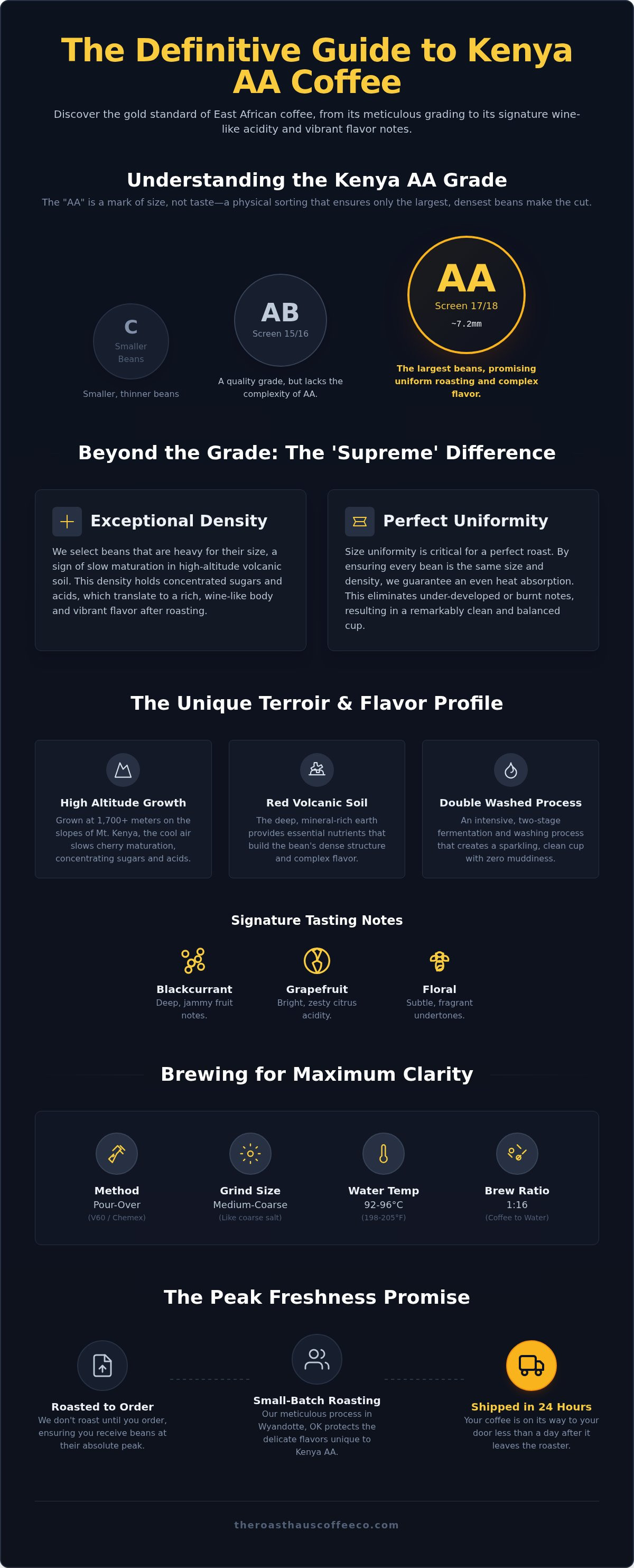
Bean sorting is done using mechanical screens with specific hole diameters. An AA grade means the beans are large enough to stay on a screen with a 17/18 rating, which is approximately 7.2 millimeters. This process is overseen by the Coffee Board of Kenya to ensure national standards remain high across the industry. Understanding Coffee production in Kenya helps clarify why these standards exist; the country's economy and its reputation for quality rely heavily on these strict export tiers.
While size is the primary factor, it often correlates with flavor. Larger beans typically come from cherries that matured more slowly at high altitudes. This slow growth allows the plant to concentrate more nutrients and complex oils within the seed. Other grades like AB (screen size 15/16) or C (smaller, thinner beans) can still produce good coffee, but they usually lack the physical presence and potential for deep complexity found in the AA tier. The sorting process is a foundational step in maintaining the integrity of the final product.
Why We Call Ours Kenya AA Supreme
Not every AA bean makes the cut for our Kenya AA Supreme. Size alone doesn't guarantee a perfect roast. We focus on density and uniformity because these factors dictate how the bean absorbs heat. Denser beans, a hallmark of high-altitude volcanic soil, can withstand the high temperatures required to develop those signature wine-like notes without turning bitter. We look for beans that are heavy for their size, indicating a wealth of stored sugars and acids.
Uniformity is the secret to a clean cup. If a bag contains a mix of sizes, the smaller beans will over-roast while the larger ones remain under-developed. By selecting only the top tier of the AA harvest, we ensure every bean in the batch reaches its peak at the exact same moment. This dedication to sorting impacts the final cup quality by removing defects and ensuring a consistent, vibrant flavor profile in every brew. You don't just get a large bean; you get a bean that roasts predictably and tastes exceptional.
The Unique Terroir and Flavor Profile of Kenyan Coffee
Kenya's geography isn't just a backdrop; it's the primary architect of the bean's soul. When you brew Kenya AA coffee beans, you're tasting a specific intersection of geology and climate that doesn't exist anywhere else on earth. This terroir produces a profile so distinct that most seasoned cuppers can identify it blindly. It's defined by a bold intensity and a complex structure that balances sharp fruit notes with a heavy, syrupy body. The result is a sensory experience that stands apart from any other African origin.
Volcanic Soil and High Altitude
The slopes of Mt. Kenya and the surrounding high plateaus offer deep, red volcanic soil. This earth is rich in minerals that the coffee trees need to thrive. Because these farms sit at elevations often exceeding 1,700 meters, the air is thinner and cooler. This environment forces the coffee cherries to mature slowly. This patience pays off in the form of concentrated sugars and organic acids. It's this slow maturation that gives the beans their unmistakable density and allows them to develop the deep, dark fruit flavors that define the region.
The Wet-Processing Method
Quality isn't just grown; it's refined through a rigorous "double washed" process. After harvesting, farmers remove the cherry skin and ferment the beans in tanks for up to 36 hours. They then wash the beans and ferment them a second time. This intensive method strips away every trace of mucilage, leaving a remarkably clean finish. This focus on Value Addition in the Coffee Industry ensures that the natural brightness isn't muddied by processing defects. Phosphoric acidity is the "sparkling" sensation on the tongue that gives the brew its lively, effervescent character.
You'll notice bold notes of blackcurrant, tart grapefruit, and subtle floral undertones. These aren't added flavors; they're the result of the bean's chemical makeup and the meticulous care of Kenyan farmers. The finish is crisp and refreshing, lacking the earthy or heavy aftertaste found in lower-quality beans. To experience these nuances at their peak, you need beans that haven't spent months sitting on a warehouse shelf. If you're ready to taste the difference that fresh, small-batch roasting makes, try our Kenya AA Supreme for a cup that truly sings.
Why Small-Batch Roasting is Essential for Kenya AA Beans
Terroir and grading provide the potential for greatness, but the roast determines if that potential is actually realized. High-acid coffees are notoriously difficult to handle. If you apply too much heat too quickly, you destroy the delicate organic compounds that create the signature wine-like profile. Most big-box retailers roast in massive quantities, prioritizing volume over nuance. This industrial approach often results in a flat, bitter cup that masks the bean's origin. We believe that Kenya AA coffee beans require a craftsman's touch to preserve their electric brightness.
Artisan vs. Industrial Roasting
Industrial roasters often use high-capacity machines that make precise temperature control impossible. In these large batches, the outer layers of the bean can scorch while the center remains underdeveloped. This leads to "burnt" citrus notes and a metallic aftertaste. Small-batch roasting allows us to monitor the bean's development second by second. We use a profile that highlights the phosphoric acidity rather than burying it under a dark roast. Learning how to identify quality coffee beans means looking for roasters who prioritize these small, controlled runs. Precision is our most important tool in the roastery.
The 24-Hour Freshness Promise
Freshness is a technical requirement, not just a preference. The volatile aromatics responsible for the "sparkle" in Kenyan coffee begin to dissipate the moment the roast ends. Most store-bought beans have sat in warehouses for weeks or even months. By the time they reach your kitchen, the blackcurrant and floral notes are long gone. Our family-owned roastery in Wyandotte, Oklahoma, operates on a roasted-to-order philosophy. We roast your Kenya AA Supreme and get it in the mail within 24 hours. This ensures the beans arrive at your door just as they enter their peak flavor window.
Specialty coffee generally peaks between day 3 and day 14 post-roast. This is when the CO2 has subsided enough to let the true flavors shine without the beans becoming stale. Our fulfillment model is designed around this timeline. We don't keep inventory on shelves. We roast specifically for you, ensuring that the legendary brilliance of the harvest is exactly what you experience in your first morning sip. This direct path from our roaster to your home is the only way to guarantee the integrity of such a world-class bean.
How to Brew Kenya AA Supreme for Maximum Flavor
Brewing Kenya AA coffee beans is different from preparing a standard grocery store blend. These beans are incredibly dense. They grew slowly at high altitudes, which means they are packed with complex sugars and acids that don't give up their flavor easily. To get the most out of your cup, you need to pay attention to water quality and temperature. Use filtered water to ensure no chlorine or minerals interfere with the delicate citrus notes. If your water is too hard, it will dull the very brightness you're trying to highlight.
Grind size is another critical factor. Because Kenyan beans are so hard, they shatter differently in a grinder than softer, low-altitude beans. Aim for a consistent medium-fine grind for drip methods or a coarse, uniform grind for immersion. If you find the coffee tastes sour or thin, your grind is likely too coarse. If it tastes bitter or ashy, go coarser. For a deeper look at mastering these variables, read our full guide on how to make coffee at home.
The Pour Over Method
The V60 or Chemex is the gold standard for this origin. Paper filters are excellent at catching fine sediment and oils that might otherwise muddy the flavor. This allows the bright, blackcurrant-like acidity to shine through with perfect clarity. It's the best way to experience the "sparkle" of the Kenya AA Supreme bean.
Use a 1:16 ratio, such as 20 grams of coffee to 320 grams of water. Heat your water to exactly 94°C. If the water is too cool, you'll miss the sparkling acidity. If it's too hot, you'll extract bitter tannins. Pour in slow, circular motions to ensure all the grounds are evenly saturated. This technique accentuates the floral and berry notes that make this coffee world-famous.
French Press for Body and Wine-like Depth
If you prefer a heavier mouthfeel, the French Press is a great alternative. It preserves the silky, wine-like body that Kenyan beans are famous for. The metal filter allows the coffee's natural oils to remain in the cup, providing a rich backdrop for the tart fruit flavors. Because these beans are so dense, they can handle a steep time of four to five minutes without losing their character.
Once the timer is up, press the plunger and decant the coffee immediately into a separate carafe. Leaving the brewed coffee in the press will lead to over-extraction and a harsh finish. Proper decanting keeps the cup clean and highlights the deep, syrupy sweetness. To start your morning with this legendary brightness, order your Kenya AA Supreme today and we'll roast it fresh for you.
Experience the Peak of Kenyan Coffee with The Roast Haus
We've explored the rigorous grading, the volcanic soil, and the precise brewing methods required for Kenya AA coffee beans. But the final, most critical link in the chain is the roasting process. At The Roast Haus, we don't treat coffee as a mass-market commodity. We treat it as a craft. Our commitment to quality starts with sourcing the finest Kenya AA Supreme. We then apply our small-batch production methods to ensure every bag reflects the integrity of its origin. This isn't just about selling a product; it's about sharing a passion for sensory excellence. Whether it is the aromatic complexity of a rare roast or the designer fragrances curated by The 9th Source, the focus remains on authenticity and artisanal quality.
Since 2014, our family-owned artisan roastery has operated with a simple goal: provide the freshest coffee possible. We're based in Wyandotte, Oklahoma, and we're proud of our identity as an independent, personal venture. When you order from us, you aren't supporting a faceless corporation. You're supporting craftsmen who handle every bag with care. We roast in small batches to maintain total control over temperature and timing. This allows us to protect the delicate acids that give Kenyan coffee its legendary brilliance.
Our fulfillment model is our biggest differentiator. We roast your beans to order and ship them within 24 hours. This ensures that the volatile aromatics and "sparkling" acidity reach your kitchen at their absolute peak. For those who want this level of freshness delivered consistently, we recommend checking out our coffee subscription options. It's the most reliable way to ensure you never have to settle for stale, over-roasted beans from a grocery store shelf ever again.
The All Day Sampler Option
If you're new to high-acid African coffees, you might want to explore how different regions compare. While our Kenya AA Supreme is famous for its bold, wine-like brilliance, our Ethiopia Limu Organic offers a different profile with its distinct floral and fruity notes. Sampling both is the best way to find your preferred level of acidity and body. We created The All Day Sampler specifically for this purpose. It allows you to taste the nuances of East African coffee side-by-side, helping you understand how terroir shapes the final cup.
We invite you to join our community of craft coffee lovers. We're confident in our product because we're transparent about our process. We want you to have the best possible experience with every cup you brew. Don't settle for industrial blends that mask the bean's true character. Experience the legendary brightness of our Kenya AA Supreme for yourself. Order a bag today and taste what happens when small-batch craftsmanship meets the world's finest beans.
Elevate Your Morning with Legendary Brightness
Choosing the right Kenya AA coffee beans is about more than just a label. It's about the volcanic soil of Mt. Kenya and the strict grading that ensures every bean is dense and full of potential. Small-batch roasting and precise brewing unlock the wine-like acidity and complex fruit notes that make this origin famous. Don't let your experience be dulled by mass-produced coffee that has sat on a shelf for months. You deserve a cup that reflects the true spirit of the harvest.
At The Roast Haus, our family-owned Oklahoma roastery is dedicated to the integrity of every batch. We use small-batch artisan quality to ensure your coffee is never over-roasted. We roast every bag to order and ship it within 24 hours of roasting. This commitment to freshness means you experience the peak flavor of the Kenya AA Supreme exactly as intended. Order Your Freshly Roasted Kenya AA Supreme Today and join our community of craft coffee lovers. We're excited to help you discover your new favorite brew.
Frequently Asked Questions
What does the "AA" in Kenya AA coffee beans mean?
The "AA" refers to the screen size of the bean, specifically size 17/18. This is the largest size in the Kenyan grading hierarchy. While size isn't a direct measure of flavor, larger beans are often associated with higher quality and more complex oils. These Kenya AA coffee beans are sorted mechanically to ensure consistency. This uniformity is vital for a balanced roast, as it prevents smaller beans from burning while larger ones stay undercooked.
Is Kenya AA coffee high in caffeine?
Kenya AA contains a standard amount of caffeine for Arabica coffee, which is roughly 1.2% to 1.5% by weight. The intense, wine-like flavors and bright acidity can sometimes be mistaken for a higher caffeine kick, but the actual stimulant level is comparable to other specialty origins. If you're sensitive to caffeine, we offer a Decaf Swiss Water Process option that provides the same artisan quality without the jitters associated with high-stimulant brews.
What is the best roast level for Kenya AA beans?
A light to medium roast is ideal for preserving the delicate flavor profile of this origin. Dark roasting tends to carbonize the natural sugars and oils, which masks the signature blackcurrant and citrus notes. We roast our Kenya AA Supreme to a level that highlights its phosphoric acidity without introducing smoky or burnt flavors. This approach ensures you taste the volcanic soil and high-altitude climate rather than just the heat of the roaster.
Why is Kenyan coffee more expensive than other origins?
The higher price reflects the intensive labor and strict quality controls involved in Kenyan production. Farmers must navigate high-altitude terrain and use a rigorous double-washing process to refine the beans. Additionally, the Kenyan auction system and recent shifts toward direct trade ensure farmers receive better compensation for their top-tier crops. When you buy Kenya AA coffee beans, you're paying for a product that has been sorted and inspected more thoroughly than standard commodity coffee.
How should I store my Kenya AA beans to keep them fresh?
You should store your beans in an airtight, opaque container kept in a cool, dark place like a pantry. Exposure to oxygen, light, and moisture will quickly degrade the volatile aromatics that provide the coffee's "sparkle." Avoid storing your beans in the refrigerator or freezer, as the temperature fluctuations can cause condensation. Because we ship within 24 hours of roasting, your beans arrive fresh and should be enjoyed within two to four weeks.
Does Kenya AA coffee taste bitter?
Kenyan coffee is famous for its brightness and acidity, not bitterness. If your cup tastes bitter, it's usually a sign of over-extraction during brewing or an over-roasted bean. True Kenya AA should have a clean, wine-like finish with tart fruit notes. We use small-batch roasting to prevent the beans from scorching, which keeps the flavor profile vibrant. Adjust your grind size or water temperature if you find the final brew is lacking its signature clarity.
Can I use Kenya AA beans for espresso?
You can certainly use these beans for espresso, though they produce a very "bright" and acidic shot. This style is popular in modern specialty cafes but might be surprising if you're used to traditional, nutty Italian espresso. The high density of the beans requires a high-quality grinder to achieve the necessary consistency. If you enjoy a citrusy, vibrant espresso that cuts through milk, our Kenya AA Supreme is an excellent choice for your home machine.
How long does it take to receive my coffee after ordering?
We roast your coffee to order in our Wyandotte, Oklahoma roastery and get it into the mail within 24 hours. Most customers receive their package within two to four business days depending on their distance from our facility. This rapid fulfillment model ensures your beans are still in their peak flavor window when they reach your kitchen. We don't believe in letting specialty coffee sit on shelves, so we prioritize speed and integrity in every shipment.

