


Most coffee drinkers chase the "AA" label like a status symbol, but without a specific roast date, that premium bag is often just expensive, stale dust. You've probably spent top dollar on "gourmet" beans before, only to be met with a cup that tastes more like sour lemon than the vibrant, wine-like berries promised on the bag. It's frustrating to pay for excellence and receive mediocrity. We believe you deserve better than a flat cup of coffee that's been sitting on a warehouse shelf for months.
In this guide, you'll discover why kenya aa coffee beans remain the world's gold standard for acidity and how our Kenya AA Supreme achieves its full potential through our small-batch process in Wyandotte, Oklahoma. We ship our beans within 24 hours of roasting to ensure the complex flavors stay intact. We'll explain the intricacies of the grading system, identify the signature flavors you should expect, and provide clear instructions on how to brew a balanced cup. By the end, you'll know exactly how to handle these world-class beans to ensure every sip is as bright and complex as intended.
Key Takeaways
- Understand that the "AA" in kenya aa coffee beans refers to the physical size of the bean, specifically those measuring 17/18/64ths of an inch.
- Learn to identify the signature phosphoric acidity and "winey" flavor profile, featuring distinct notes of blackcurrant and sun-ripened berries.
- Discover why immediate roasting is vital, as the volatile aromatics in our Kenya AA Supreme begin to fade when left on warehouse shelves.
- Master the golden brewing rules, including using a medium-coarse grind and specific water temperatures to prevent over-extraction and sourness.
- Recognize how our 24-hour roast-to-ship model in Wyandotte, Oklahoma, preserves the integrity of these world-class beans.
What Are Kenya AA Coffee Beans? Decoding the Grade
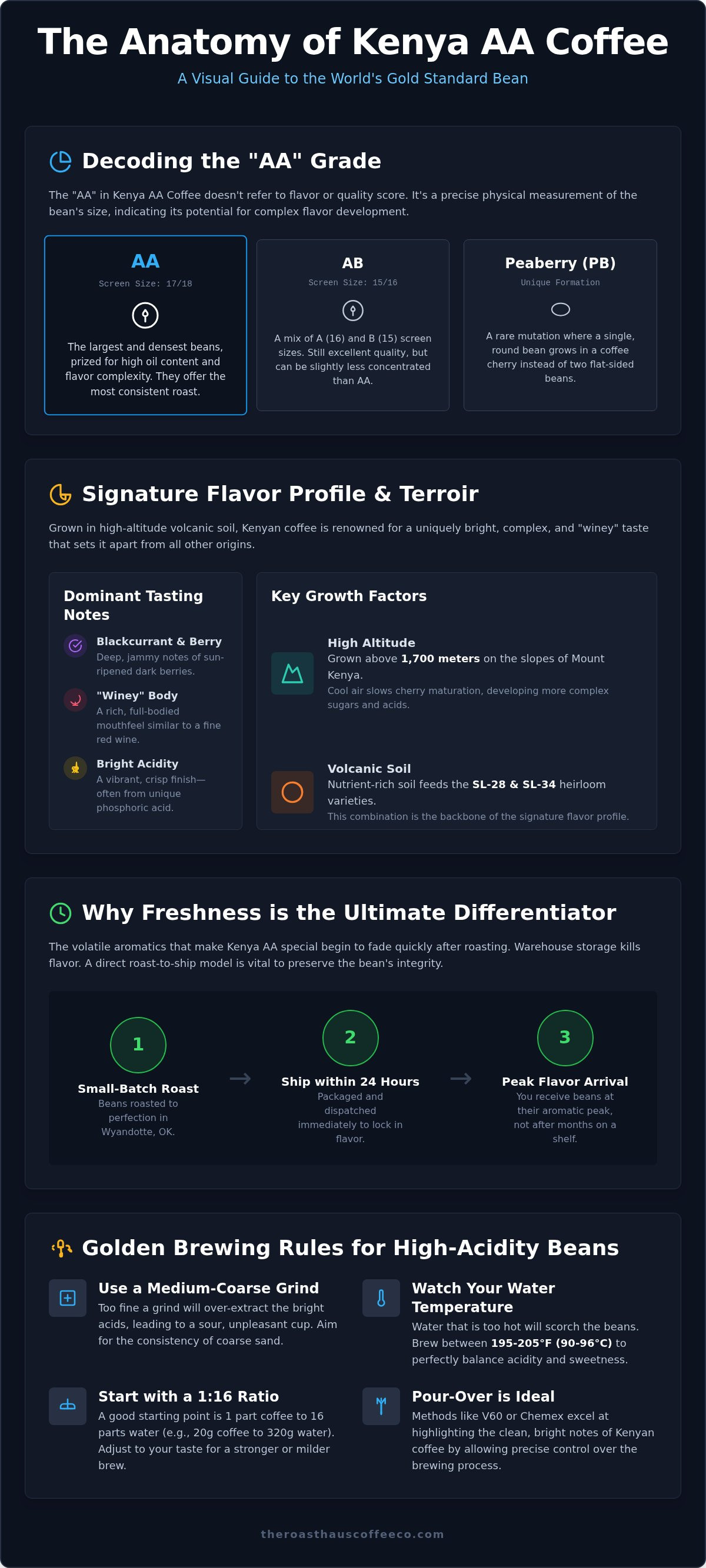
When you hear the term kenya aa coffee beans, it's easy to assume you're looking at a flavor score or a gourmet label. In reality, "AA" is a physical measurement. It describes the size of the coffee bean based on a rigorous grading system established to ensure consistency. These beans are the largest in a harvest, specifically those that stay on top of a screen with 17/64ths or 18/64ths of an inch holes. While size doesn't guarantee a specific taste, it's a massive indicator of potential quality.
This grading happens before the beans ever reach a roaster. The system is part of a larger historical framework for coffee production in Kenya, where a central auction system rewards farmers for quality and size. By separating beans by size, the industry ensures that roasters receive a uniform product. This uniformity is vital for our small-batch process in Wyandotte, Oklahoma, because it allows us to apply heat evenly to every single bean in the drum. When every bean is the same size, they all reach the peak of their flavor profile at the exact same moment.
The Kenyan Grading Scale: AA, AB, and Beyond
The scale ranges from E (Elephant beans) down to C and T. However, the specialty market focuses on three main categories that you'll likely encounter when shopping for high-end coffee:
- AA: The largest beans, prized for their density and high oil content.
- AB: A mix of A and B sizes (screen sizes 15 and 16). These are often excellent but may lack the intense concentration of the AA grade.
- Peaberry (PB): A rare occurrence where only one round bean grows inside the coffee cherry instead of two flat ones.
For an independent roaster, sourcing kenya aa coffee beans means paying a premium at auction. We believe the investment is worth it because larger beans typically grow slower at higher altitudes. This slow growth leads to more complex sugars and organic acids, which are the building blocks of a superior cup.
Why 'AA' is the Gold Standard for Specialty Coffee
Consistency is the secret to a great cup. If you mix large and small beans in a roaster, the small ones will burn before the large ones are fully developed. Because our Kenya AA Supreme consists only of these large, dense beans, we can achieve a precise roast that highlights the bean's natural brilliance without any "under-roasted" grassy notes or "over-roasted" bitterness. These dense beans hold more essential oils, which translate into the heavy body and intense aromatics that Kenyan coffee is famous for. By focusing on the AA grade, we ensure the raw material is capable of handling the artisan roasting process required to bring out those signature berry notes.
The Flavor Profile and Terroir of Kenyan Coffee
Kenyan coffee is famous for its "winey" profile. This isn't a marketing term; it's a literal description of the heavy body and complex fruitiness found in the cup. This unique character comes from the high-altitude volcanic soil on the slopes of Mount Kenya. The soil is rich in nutrients and minerals that feed the trees. Most kenya aa coffee beans come from SL-28 and SL-34 varieties. These heirloom genetics were developed specifically for the Kenyan climate. They are the backbone of the flavor profile, producing deep blackcurrant, tart grapefruit, and sun-ripened berry notes. These flavors are bold. They don't hide in the background. Instead, they provide a structured and intense experience that sets Kenyan coffee apart from any other origin in the world.
The Role of High-Altitude Growing Regions
Nyeri, Murang'a, and Kirinyaga are the core regions for top-tier production. Think of these areas as the "Napa Valley" of the coffee world. At elevations above 1,700 meters, the air is consistently cool. This environment slows down the maturation of the coffee cherry. Slower growth gives the plant more time to develop dense sugars and organic acids within the bean. To preserve these sugars, farmers often use a "double washed" processing method. This involves two separate fermentation stages to strip away every trace of fruit pulp. It's a labor-intensive tradition in the Kenyan coffee industry that results in a remarkably clean and transparent cup. When the processing is done correctly, the natural brilliance of the bean shines without any muddy or fermented off-flavors.
Phosphoric Acidity vs. Citric Acidity
Most specialty coffees rely on citric acidity, which tastes like lemon or orange. Kenyan beans are different because they contain high levels of phosphoric acidity. This is the same acid found in some sparkling sodas. It creates an effervescent, "bubbly" sensation on the tongue that many enthusiasts call a "sparkle." While Ethiopian beans are often floral and tea-like, Kenyan beans are powerful and juicy. Phosphoric acidity is the secret to the clean, crisp finish of Kenya AA. It cuts through the natural sweetness of the berries and leaves your palate feeling refreshed. If you're looking to experience this vibrant intensity for yourself, our Kenya AA Supreme is sourced specifically for this balanced, sparkling acidity. We roast it in small batches to ensure these delicate acids aren't scorched away by high heat.
Why Freshness is the Ultimate Differentiator for Kenya AA
Kenyan coffee is a ticking clock. The moment the beans leave the roaster, that clock starts. The signature blackcurrant and berry notes that define kenya aa coffee beans are highly volatile. These aromatic compounds are the first to escape into the air. If you wait weeks to brew your coffee, those vibrant notes vanish. You're left with a cup that lacks the "sparkle" you paid for. We've seen many enthusiasts buy expensive bags only to be disappointed because the coffee was roasted months ago. Freshness isn't just a preference; it's a requirement for this origin.
Peak flavor doesn't happen immediately after roasting. Every bean needs to degas. This is the process where carbon dioxide escapes from the cell structure. For our Kenya AA Supreme, the sweet spot usually hits between days 3 and 10. During this window, the acidity is balanced and the sugars are at their most expressive. The unique environmental factors involved in Coffee growing in Kenya create a bean packed with these delicate aromatics, but they're fragile. Because we ship within 24 hours of roasting, your beans arrive exactly when they're entering this peak flavor window.
The Problem with Grocery Store 'Premium' Coffee
Grocery store shelves are where great coffee goes to die. Even if the bag says "premium" or "AA," it has likely spent weeks in a warehouse and more weeks on a shelf. Oxidation is the enemy here. When coffee sits, the natural oils begin to break down and turn rancid. This process turns that famous Kenyan brightness into a bitter, vinegary sourness. To understand how the heat profile during the roast affects these oils and preserves that freshness, check out The Art of Roasting. Once that "sparkle" is gone, no amount of brewing technique can bring it back.
Our Roasted-to-Order Philosophy in Wyandotte, Oklahoma
We do things differently at our family-owned roastery in Wyandotte, Oklahoma. We don't roast coffee to sit on a shelf. We roast it for you. Every order of Kenya AA Supreme is treated as a bespoke project. Small-batch roasting gives us total control over heat and airflow. This precision is vital for kenya aa coffee beans because they are so dense. We monitor the roast minute by minute to ensure we hit the perfect development level. Our fulfillment model is our biggest differentiator. By shipping within 24 hours, we cut out the middleman and the warehouse. You get artisan quality delivered straight from our Oklahoma roastery to your doorstep in record time. It's the only way to experience the true potential of the world's brightest brew.
Brewing Guide: How to Handle High-Acidity Beans
Brewing kenya aa coffee beans is an exercise in precision. Because these beans are so dense and acidic, they don't behave like your average supermarket coffee. If your water is too cool, the coffee tastes like sour lemons. If your grind is too fine, the cup becomes muddy and harsh. You need to balance the extraction to let those berry notes sing without being overwhelmed by the intense phosphoric acidity. Our goal is to help you achieve a cup that is bright but balanced, reflecting the craftsmanship we put into the roast.
Start with the golden rule of temperature. For light to medium roasts, use water between 200°F and 205°F. This high heat is necessary to penetrate the dense cell structure of the AA grade. Pair this with a medium-coarse grind. A coarse texture slows down the extraction of acidic compounds, preventing that sharp, unpleasant bite. If you find your coffee tastes thin or watery, you can slightly fine up the grind, but do so in small increments. For a deeper look at the basics, read our guide on How to Make Coffee.
Don't overlook your water quality. Since a cup of coffee is 98% water, using tap water with heavy mineral content will mask the delicate grapefruit and blackcurrant notes. Always use filtered water to ensure a clean, crisp finish. This allows the natural terroir of the Kenyan highlands to come through clearly in every sip. It's a simple step that makes a massive difference in the final clarity of the brew.
Pour-Over: The Best Method for Kenya AA
Pour-over methods like the V60 or Chemex are the best way to experience these beans. They use paper filters that trap oils and sediment, resulting in a clean, tea-like body. We recommend a 1:16 coffee-to-water ratio. For example, use 25 grams of coffee for 400 grams of water. Start with a 45-second bloom using double the weight of the coffee in water. This step is critical for our fresh-roasted beans. It allows the CO2 to escape so the water can fully saturate the grounds and extract those complex sugars.
French Press and Cold Brew Alternatives
If you prefer a heavier, winey body, use a French Press. To avoid silt and over-extraction, stick to a very consistent coarse grind. You can learn more about choosing the right equipment in our guide to Coffee Grinders. Interestingly, kenya aa coffee beans also make an incredible cold brew. The long, cold extraction process mutes some of the sharp acidity and unlocks a hidden sweetness reminiscent of stone fruit and dark chocolate. Ready to test your brewing skills? Order a bag of our Kenya AA Supreme today and experience the full potential of these world-class beans.
Experience the Peak: The Roast Haus Kenya AA Supreme
Our Kenya AA Supreme represents the highest expression of everything we've discussed in this guide. We don't just buy any kenya aa coffee beans that come across the auction block. We hunt for specific lots that offer a perfect balance of sparkling phosphoric acidity and deep, syrupy sweetness. Since 2014, our family-owned roastery in Wyandotte, Oklahoma, has focused on one goal: preserving the integrity of the bean from the moment it lands on our dock to the moment it reaches your cup. This isn't just about selling a product; it's about sharing our passion for craftsmanship with fellow coffee lovers who refuse to settle for stale, warehouse beans.
Our artisan roasting profile is designed specifically for clarity. We avoid the dark, oily roasts that mask the bean's natural character with carbon and smoke. Instead, we use a precise heat curve to develop the sugars while keeping those delicate, winey acids intact. This ensures you get all the berry notes without any burnt or bitter aftertaste. It's a hands-on process that requires constant attention to the drum temperature and airflow, but that's the difference between a mass-produced product and a craftsman's work. Every bag we ship is a testament to this dedicated, small-batch approach.
What Makes Our 'Supreme' Selection Different?
We source only high-density, high-altitude Kenyan lots that meet our strict "Supreme" criteria. These beans have the physical strength to withstand the heat of our roasting process without losing their structural integrity. We perform rigorous sensory testing and cupping on every small batch to ensure the flavor profile is consistent and vibrant. The first sip of our Kenya AA Supreme is a burst of blackcurrant and citrus. It's an immediate, refreshing reminder of why these kenya aa coffee beans are so highly regarded in the specialty coffee world. By focusing on these high-density lots, we provide a cup that is both complex and incredibly clean.
Join The Roast Haus Community
Freshness is our mantra, and our coffee subscription is the best way to ensure you never run out of peak-flavor coffee. You can set your own schedule and receive bags that were roasted less than 24 hours before they were shipped. This "roasted-to-order" model is our ultimate differentiator. It's a commitment to transparency and quality that large corporations simply cannot match. We're proud to be an independent business in Wyandotte that values the authentic voices of our customers and the integrity of our process. Order your Kenya AA Supreme today and join a community that takes its morning ritual seriously.
Elevate Your Morning Ritual with True Kenyan Brilliance
Mastering the nuances of kenya aa coffee beans changes how you view your morning cup. You now understand that the "AA" grade is a promise of density and potential, while the unique volcanic soil of Mount Kenya provides the foundation for that world-class acidity. Without the right timing and technique, those characteristics stay locked inside the bean or fade away on a store shelf. You deserve a cup that reflects the hard work of the farmers and the precision of the roast.
We take the guesswork out of the process at our family-owned Oklahoma roastery. By focusing on small-batch artisan quality and shipping within 24 hours of roasting, we ensure you receive your beans at their absolute peak. You don't have to settle for flat, uninspired coffee when you can experience the vibrant blackcurrant and citrus notes of a perfectly developed roast. It's time to stop drinking warehouse coffee and start enjoying the "sparkle" that only fresh Kenyan beans can provide.
Shop Kenya AA Supreme – Roasted to Order and bring the world's brightest brew into your kitchen. We're excited to help you discover the full potential of these extraordinary beans.
Frequently Asked Questions
What does the 'AA' stand for in Kenya AA coffee beans?
The 'AA' in kenya aa coffee beans refers to the physical size of the bean based on a standardized screen grading system. These are the largest beans in a harvest, specifically those that pass through a screen with holes measuring 17/64ths or 18/64ths of an inch. Larger beans are prized because they often contain more essential oils and develop more consistently during the roasting process, which leads to the complex flavor profile the region is known for.
Is Kenyan coffee high in caffeine compared to other beans?
Kenyan coffee contains roughly the same amount of caffeine as other Arabica varieties. While the intense flavor and high acidity might make the brew feel more stimulating, the actual caffeine content is determined by the species and the roast level rather than the origin. Light and medium roasts, which are common for Kenyan beans, preserve slightly more caffeine by volume than dark roasts, but the difference is minimal for the average coffee drinker.
Why does Kenya AA coffee taste like wine or fruit?
The distinct "winey" and fruity notes come from the unique combination of SL-28 and SL-34 heirloom varieties grown in nutrient-rich volcanic soil. High-altitude environments on Mount Kenya slow down the maturation process, allowing the plant to develop concentrated sugars and organic acids. This results in the signature blackcurrant, grapefruit, and berry flavors. When these kenya aa coffee beans are processed using the traditional double-washed method, these natural fruit characteristics become even more pronounced and clean.
What is the best roast level for Kenya AA beans?
We recommend a light to medium roast for our Kenya AA Supreme. This level of development is ideal because it preserves the delicate phosphoric acidity and volatile fruit aromatics that define the origin. Roasting too dark can mask these unique characteristics with smoky or bitter carbon notes, effectively destroying the "sparkle" that enthusiasts seek. At The Roast Haus, we tailor our small-batch roasting profile to highlight the berry notes while ensuring a smooth, balanced finish.
How should I store my Kenya AA beans to keep them fresh?
To maintain the integrity of your beans, store them in an airtight container in a cool, dry, and dark place. Exposure to oxygen, light, and moisture will cause the volatile oils to oxidize and turn the vibrant acidity into a flat or sour taste. Avoid keeping your coffee in the freezer or refrigerator, as the condensation can damage the bean structure. For the best experience, buy smaller quantities frequently to ensure you're always brewing fresh coffee.
Can I use Kenya AA for espresso?
You can certainly use Kenyan beans for espresso, but be prepared for a very bright and intense shot. The high acidity can sometimes taste sharp when concentrated in an espresso machine. To balance this, some baristas prefer to use it as a component in a blend or pull a "long" shot to soften the phosphoric bite. However, many specialty enthusiasts enjoy the "fruit bomb" effect of a straight Kenyan espresso, especially when paired with milk.
Why is Kenyan coffee more expensive than other African coffees?
Why is Kenyan coffee more expensive than other African coffees?
We suggest waiting 3 to 10 days after the roast date to begin brewing. This period allows the beans to degas, which is the process of releasing carbon dioxide trapped inside the cell structure. If you brew too early, the gas can interfere with water contact and lead to an uneven extraction. Since we ship our Kenya AA Supreme within 24 hours of roasting, your order will typically arrive right as it's entering this peak flavor window.

