


Nearly 40% of the decaf market still relies on solvent-based methods that use chemicals like methylene chloride. If you have ever felt disappointed by a "flat" tasting cup or worried about what exactly is left behind on your beans, you aren't alone. You want the ritual of coffee without the caffeine jitters, but you shouldn't have to compromise on safety or sensory excellence. Understanding the non-chemical decaffeination process is the first step toward reclaiming your coffee experience and ensuring your morning cup is as clean as it is flavorful.
We're here to clear up the confusion surrounding labels like "Water Process" and "Swiss Water." You'll discover how methods like the Swiss Water Process use simple science to remove caffeine while leaving the delicate flavor oils intact. We will explain the mechanics of CO2 extraction and why new global standards, such as those arriving in 2028, are pushing for stricter caffeine limits of 0.1% or less. By the end of this guide, you will feel confident choosing a clean, chemical-free coffee that actually tastes like the high-quality specialty beans you love. It's time to enjoy a decaf that honors the craft of the grower and the health of the drinker.
Key Takeaways
- Learn why avoiding solvents like methylene chloride is essential for a clean, health-conscious coffee ritual.
- Understand the mechanics of the non-chemical decaffeination process, which relies on natural solubility to keep the bean's artisan soul intact.
- Compare the Swiss Water and CO2 methods to see how each process handles caffeine removal without using harsh chemical additives.
- Discover the science behind flavor preservation and why chemical-free beans retain the sugars and acids necessary for a full-bodied taste.
- Master the art of reading labels to identify 100% chemical-free descriptors and why roasted-to-order quality matters for decaf drinkers.
Why Conventional Decaf Uses Chemicals (And Why It Matters)
The history of the decaffeination process shows that early methods were even more aggressive, using benzene before safety standards evolved. Today, the choice is between chemical efficiency and artisanal quality. We believe that shortcuts in production lead to a subpar experience in the cup. If you want a coffee that respects the work of the farmer, you have to look past the cheapest processing options.
Methylene Chloride vs. Ethyl Acetate
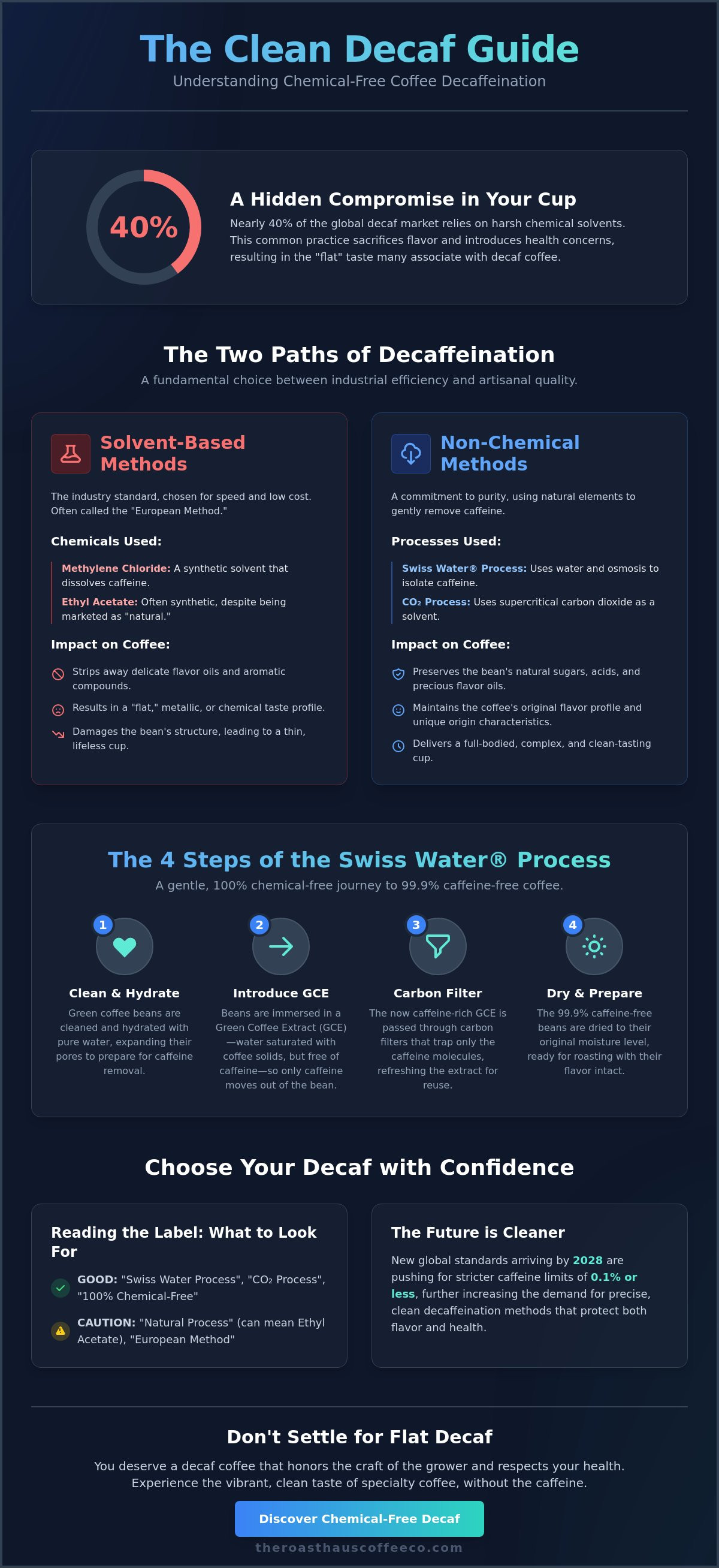
Methylene Chloride is a synthetic solvent used to dissolve caffeine directly or indirectly. While the FDA sets safety limits for residual amounts, many health-conscious drinkers prefer to avoid it entirely. Ethyl Acetate is sometimes labeled as a "natural process" because the compound exists in sugarcane or fruit. However, the industrial version is often synthetic and can still leave a distinct, sweet chemical odor on the beans. These residual concerns are why demand for 100% clean alternatives is rising. You shouldn't need a chemistry degree to trust your morning brew is safe and clean.
How Solvents Affect the Coffee Bean
Harsh chemicals don't just target caffeine. They also strip away the delicate oils and volatile compounds that give coffee its unique personality. When you process a high-quality bean like our Kenya AA Supreme with solvents, you risk losing that bright, signature acidity. The beans often become porous and thin. This results in a cup that lacks body and complexity. Beyond the flavor, industrial solvent disposal creates a significant environmental footprint. This is a stark contrast to the clean, water-based methods we champion. A non-chemical decaffeination process ensures that the sugars and acids that make coffee delicious stay exactly where they belong: inside the bean. We refuse to compromise on sensory excellence just to save a few cents on processing.
Inside the Non-Chemical Decaffeination Process: How Water Does the Work
The non-chemical decaffeination process relies on the natural laws of solubility and osmosis. While chemical methods use solvents to force caffeine out, water-based methods work with the bean's biology. This approach was first discovered in Switzerland in the 1930s. Since then, it has evolved into a specialty standard that honors the original flavor of the coffee. For small-batch roasters, using a water-processed bean is a clear badge of quality. It shows a commitment to both health and sensory excellence.
The Swiss Water Process uses temperature and time to gently coax caffeine out. This careful balance ensures the bean's structure isn't damaged by aggressive heat or harsh additives. If you want to experience this difference, our Decaf Swiss Water Process offers a clean, vibrant cup that rivals any caffeinated blend.
The 4 Steps of the Swiss Water Process
Step 1 involves cleaning and hydrating the green beans. This expands the bean's pores and prepares it for caffeine release. In Step 2, the beans enter a Green Coffee Extract (GCE) bath. This water is already saturated with coffee flavor solids, so only the caffeine moves out of the bean. Step 3 uses carbon filtration to trap the caffeine molecules while keeping the flavor-charged water ready for reuse. Finally, Step 4 involves drying the beans until they are 99.9% caffeine-free and stable for roasting.
Why Water is the Ideal Solvent
Water is a universal solvent that respects the organic structure of the coffee bean. Because no chemicals are introduced, there is no risk of synthetic residue. This ensures a clean cup that mirrors the origin profile of the bean. Green Coffee Extract is the flavor-saturated liquid that creates the equilibrium necessary to remove caffeine without stripping away the oils and acids we love. By choosing a non-chemical decaffeination process, you ensure that the only thing missing from your cup is the caffeine. This method protects the delicate sugars and lipids that define a truly great coffee experience.
Swiss Water vs. Carbon Dioxide: Comparing Clean Decaf Methods
While water is a powerful tool for removing caffeine, the non-chemical decaffeination process also includes the Carbon Dioxide (CO2) extraction method. This technique uses high pressure and liquid CO2 to pull caffeine from green beans. It is a highly technical, industrial approach often favored for large commercial organic batches because the equipment is designed for massive volume. In contrast, the Swiss Water Process remains the preferred choice for specialty-grade beans. It is a more deliberate, artisanal method that prioritizes the unique character of small-batch coffee over industrial scalability.
The environmental impact of these two methods also differs. CO2 extraction is energy-intensive, requiring significant power to compress gas into a supercritical liquid state. While it is efficient for large-scale operations, it lacks the hands-on control found in water-based filtration. Swiss Water relies on mechanical carbon filters and natural solubility, making it a better fit for independent businesses that value lower-energy, craft-focused production models.
Flavor and Aroma Retention
Flavor is where the distinction between these methods becomes most apparent. Swiss Water is widely considered the superior method for preserving delicate floral and fruity notes. Because it uses a flavor-saturated extract to maintain equilibrium, it prevents the bean's unique origin notes from leaching out. The CO2 method is excellent at maintaining body and sweetness in darker roasts, but it can sometimes mute the complex acidity of high-altitude coffees. At The Roast Haus Coffee Co., we prioritize origin character above all else. This is why we choose the Decaf Swiss Water Process for our customers. We want you to taste the bean, not the chemistry.
Purity and Certifications
Flavor Integrity: Why Chemical-Free Methods Taste Better
The old "Death Before Decaf" slogan was born from a time when decaf was synonymous with chemical stripping. When you use a non-chemical decaffeination process, you're protecting the lipids, sugars, and acids that provide the coffee's body and sweetness. If these are washed away by solvents, you're left with a thin, metallic brew that lacks character. At The Roast Haus Coffee Co., we start with specialty-grade beans rather than the low-quality commodity lots often reserved for decaf production. For our community in Oklahoma, we ensure these high-quality beans are roasted fresh to capture their full potential before they ever reach your cup.
Quality begins with the selection of the green bean. Many large-scale producers assume decaf drinkers won't notice a lower-grade bean, but we believe the opposite is true. Without caffeine to provide a bitter punch, the natural flavors of the bean are even more exposed. This is why using a clean process is essential for maintaining the integrity of the harvest.
Preserving the Origin Character
Terroir is the unique taste of a specific place, soil, and climate. A non-chemical decaffeination process ensures that these specific notes stay in the bean. A clean decaf should be indistinguishable from a caffeinated cup in a blind taste test, whether it is a floral Ethiopian lot or a nutty Colombian bean. Roasting plays a massive role in unlocking these preserved flavors. You can learn more about our philosophy on development in The Art of Roasting: A Guide to Fresh Coffee. We roast to highlight the bean's natural character rather than hiding it under a layer of smoke.
The Roaster’s Challenge: Roasting Decaf Beans
Decaffeinated beans are fragile. The process of removing caffeine makes the cellular structure of the bean more porous, which means they are incredibly sensitive to heat in the drum. A master roaster must be precise with gas and airflow to avoid scorching. Decaf beans also look darker during the roast than regular beans. If a roaster relies on color alone, they will over-roast the beans every time. The Roast Haus Coffee Co. uses small-batch roasting to maintain total control over the temperature. If you are ready to taste the difference that clean processing and expert roasting make, shop our specialty decaf collection and experience real flavor without the caffeine.
Choosing the Right Decaf for Your Home Brew
Finding a high-quality decaf starts with reading the label. You should look for the "Swiss Water" seal or explicit "100% Chemical-Free" descriptors on the bag. These markers guarantee that the beans were treated using a non-chemical decaffeination process rather than being soaked in synthetic solvents. If a label is vague or simply says "decaffeinated," it's likely a mass-produced product that relies on the cheaper chemical methods we discussed earlier. We believe transparency is the foundation of a good cup of coffee.
Freshness is even more critical for decaf than it is for regular beans. Because the decaffeination process makes the bean structure more porous, the coffee can stale faster once it's roasted. This is why "Roasted-to-Order" coffee is the only way to ensure you're getting the full flavor profile of the bean. To keep your clean decaf fresh at home, store it in an airtight container in a cool, dark place. Avoid the freezer, as moisture can damage the delicate oils that the water process worked so hard to preserve.
When you're ready to brew, you might need to make small adjustments to your technique. Decaf beans often extract faster than caffeinated ones. If your coffee tastes too bitter, try a slightly coarser grind or a shorter brew time. You can find more detailed advice on perfecting your technique in our guide on how to make coffee. Small tweaks can make a massive difference in the clarity of the cup.
What to Ask Your Local Roaster
Don't be afraid to ask your roaster direct questions about their sourcing. A quality craftsman will be proud to tell you exactly how their beans were processed. Ask if they use a water-based or CO2 method and where the beans were grown. Supporting independent, family-owned roasteries ensures better quality control. These businesses are often more invested in the non-chemical decaffeination process because they care about the health of their community and the integrity of their product.
The Roast Haus Commitment to Clean Coffee
Our commitment to quality is personal. We focus exclusively on the Swiss Water Process: Great Decaf Without Chemicals because we refuse to settle for anything less than excellence. Every bag we sell is a result of our small-batch, Oklahoma-based craftsmanship. We want you to feel confident that your coffee is safe, clean, and delicious. If you're new to clean decaf, we encourage you to try "The All Day Sampler." It's the best way to experience how our specialty roasting brings out the best in these chemical-free beans without the caffeine jitters.
Elevate Your Decaf Experience
You now understand why conventional solvents like methylene chloride have no place in a specialty cup. Choosing a non-chemical decaffeination process isn't just about avoiding synthetic additives; it is about respecting the complex sugars and acids that make coffee a craft beverage. Whether you prefer floral origin notes or deep sweetness, the Swiss Water method ensures those characteristics remain intact. You don't have to settle for thin, metallic coffee anymore.
At The Roast Haus, we take this clean foundation and apply our small-batch artisan quality to every roast. Our beans are 99.9% caffeine-free without chemicals and are roasted-to-order in Wyandotte, OK. This ensures you receive the freshest possible product delivered straight to your door. Shop our freshly roasted Decaf Swiss Water Process beans today and taste the difference that honest craftsmanship makes. It's time to enjoy your favorite ritual at any hour of the day.
Frequently Asked Questions
Is the Swiss Water decaffeination process truly 100% chemical-free?
Yes, the Swiss Water method is 100% chemical-free because it relies entirely on water, temperature, and carbon filtration to remove caffeine. Unlike solvent-based methods that use synthetic chemicals, this process creates an equilibrium using Green Coffee Extract to gently extract caffeine while leaving the bean's flavor oils untouched. It's a certified organic method that ensures no synthetic residue remains on your beans. This makes it the cleanest choice for health-conscious coffee drinkers.
Does non-chemical decaf coffee taste different from regular coffee?
High-quality non-chemical decaf is designed to be indistinguishable from its caffeinated counterpart. Because the process protects the bean's natural sugars and acids, the origin character remains intact. You'll still taste the bright acidity of a Kenyan bean or the chocolatey notes of a South American lot. The old myth of flat decaf usually comes from chemical processing, which strips away the very oils that provide flavor and body.
Why is non-chemical decaf usually more expensive than regular decaf?
Non-chemical decaf is often more expensive because the process is slower and requires more specialized equipment than chemical solvent methods. Water-based methods are handled in smaller batches to ensure quality control and flavor preservation. Additionally, producers typically start with higher-grade specialty beans rather than cheap commodity coffee. You're paying for the extra care, safety, and sensory excellence that comes with a premium, artisan production model.
Can I find organic coffee that uses a non-chemical decaffeination process?
Yes, you can find many organic coffees that utilize a non-chemical decaffeination process. In fact, organic certification standards often prohibit the use of synthetic solvents like methylene chloride. Methods like Swiss Water or CO2 extraction are the preferred choices for organic producers because they maintain the bean's organic integrity. This ensures your morning cup is free from both pesticides and industrial processing chemicals, supporting a cleaner lifestyle and better environmental practices.
Is the Carbon Dioxide (CO2) decaffeination method safe for health?
The CO2 method is considered very safe because it uses carbon dioxide, a natural element we breathe every day. When CO2 is pressurized into a liquid state, it acts as a selective solvent that only targets caffeine molecules. It leaves no harmful residue on the beans and is often used for large-scale organic production. While it's more energy-intensive than water processes, it remains a clean, non-toxic alternative to conventional chemical solvents.
How much caffeine is actually removed in a non-chemical process?
A high-standard non-chemical decaffeination process typically removes 99.9% of the caffeine content. This is the industry benchmark for caffeine-free labeling in many regions. For example, the Swiss Water method is certified to be 99.9% caffeine-free, ensuring that even highly sensitive drinkers can enjoy their coffee without jitters. This level of efficiency is achieved through rigorous monitoring and testing during the filtration stages to ensure the final product meets strict purity standards.
Does decaf coffee have a shorter shelf life than regular coffee?
Decaf coffee can have a shorter shelf life because the decaffeination process makes the bean's cellular structure more porous. These open pores allow oxygen to penetrate more easily, which can lead to faster oxidation of the flavor oils. To combat this, we recommend buying roasted-to-order beans in small quantities. Storing your coffee in an airtight, opaque container away from heat and light will help maintain its freshness and vibrant flavor profile for longer.
What is the "Sugar Cane" decaf process and is it chemical-free?
The Sugar Cane process uses ethyl acetate, a compound derived from fermenting sugarcane. While it's often marketed as a natural method, it's still a solvent-based process. Some versions use synthetic ethyl acetate rather than the fruit-derived variety. While it's generally considered safer than methylene chloride, it can leave a distinct sweet smell or flavor on the beans. For those seeking a truly 100% solvent-free experience, water-based methods remain the top choice.

