


Why does that $22 bag of beans taste like a lemon when you just wanted a smooth, comforting cup? You aren't alone if you feel overwhelmed by the jargon on coffee labels or frustrated by buying expensive beans that end up tasting too acidic for your liking. Understanding the debate of single origin vs blend coffee is the first step toward a better morning. While specialty single origin coffees average about $21.67 per bag, a higher price tag doesn't always mean it's the right fit for your specific palate or brewing setup.
For those seeking the absolute pinnacle of this category, you can discover more about premium Geisha coffee sales and VIP experiences to see how world-class, rare beans are sourced and presented for true connoisseurs.
We believe you should feel confident about the coffee you buy. It's discouraging to waste money on bags that don't hit the mark; especially when you're trying to support independent craft. This guide will show you the real differences between these two choices so you can find a bean that matches your taste. We'll explain how to read those complex labels and show you which brewing methods bring out the best in each type. You'll gain the knowledge needed to choose beans that make your morning brew something to look forward to every single day.
Key Takeaways
- Learn the fundamental differences between beans sourced from a single farm and intentional mixtures designed for a specific flavor profile.
- Understand the single origin vs blend coffee choice by comparing unique geographic stories with the consistent, balanced craft of a roaster's signature style.
- Identify which coffee matches your specific palate, whether you crave bright, fruity notes or a smooth, chocolatey finish.
- Discover how to pair your home brewing equipment with the right bean type to extract the best possible flavor from every cup.
- See why a small-batch, roasted-to-order approach is the ultimate differentiator for quality, regardless of the bean's origin.
Defining the Basics: What is Single Origin vs. Blend Coffee?
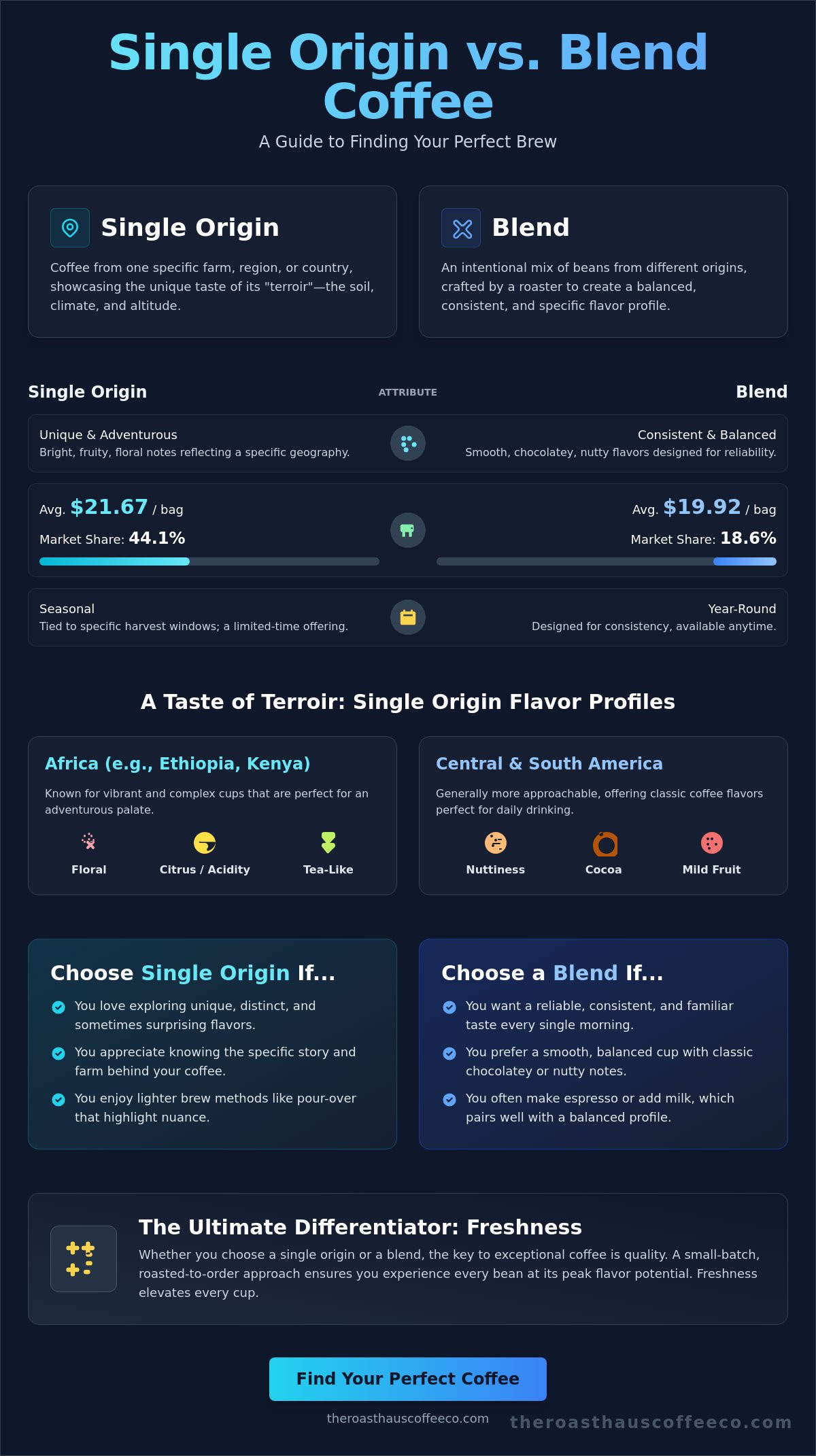
Choosing between single origin vs blend coffee isn't about finding which one is better. It's about deciding what experience you want in your mug. At its simplest, single origin coffee comes from one specific place; this might be a single country, a specific region, or even a single farm. On the other hand, coffee blends are intentional mixtures. Roasters combine beans from different origins to create a specific flavor profile that a single bean couldn't achieve alone. The market reflects this divide in interest. Single origin coffees currently account for 44.1% of the specialty coffee market, while blends hold about 18.6%. Both categories can be excellent if the roaster prioritizes quality over volume.
The Concept of Single Origin Purity
When you drink a single origin, you are tasting the land. This is often called terroir. Factors like soil composition, altitude, and local climate dictate how that bean tastes, creating a specific profile that cannot be replicated elsewhere. If you're looking for a deep dive into What is Single Origin Coffee?, you'll find that traceability is the biggest draw. You know exactly who grew your beans and where they were processed. Because these coffees rely on specific harvests, they are seasonal. When the crop is gone, it's gone until the next year. On average, a bag of single origin coffee costs about $21.67. This price reflects the scarcity and the unique story of a single-farm lot.
The Purpose of the Master Blend
Blends are the result of a roaster's craft. The goal here is consistency and balance. While a single origin bean might taste different from one harvest to the next, a blend is designed to taste the same year-round. Roasters use balance to create these profiles. They might take a bean with a heavy body and mix it with one that has high acidity to create a smoother finish. This layering creates a complex cup. You get the chocolate notes from one region and the citrus zing from another in the same sip. High-quality blends average about $19.92 per bag. They offer a reliable, harmonious experience that serves as a perfect daily driver for your morning routine.
Don't let the labels confuse you. Both options can be "specialty" grade. This label depends on the quality of the green beans and the care taken during the roast. A high-quality blend uses the same premium beans you'd find in a single origin bag. The difference is simply the final goal. You are choosing between the purity of a single location or the harmony of a crafted flavor profile. Both have a place in a well-stocked kitchen.
The Appeal of Single Origin: A Window into Geography
Drinking single origin coffee is like taking a geography lesson in a cup. Each sip tells a story of the specific land where the beans grew. The debate of single origin vs blend coffee often comes down to how much you value the distinct personality of a single farm. When you choose a single origin, you aren't looking for a generic coffee flavor. You're looking for the unique traits that only that specific soil, altitude, and climate can produce. This purity of flavor is why many enthusiasts prefer single origins for their morning ritual.
Understanding Regional Flavor Profiles
Different parts of the world produce vastly different flavors. African origins are famous for their bright, floral, and tea-like qualities. For example, The Roast Haus Ethiopia Limu Organic offers a crisp acidity that you simply won't find in a standard supermarket tin. Kenya is another powerhouse, known for its bold body and intense citrus notes. These coffees are perfect if you enjoy a "bright" or adventurous cup that wakes up your palate.
In contrast, Central and South American origins like Honduras or Colombia tend to be more approachable for the average drinker. They often feature notes of nuttiness, cocoa, and mild fruit. While some drinkers prefer the consistency found in The Craft of Coffee Blends, those who want to explore the world through their mug will always gravitate toward single origins. These beans allow you to taste the difference between a high-altitude farm in the Andes and a sun-drenched estate in East Africa.
Why Single Origins are Seasonal
Single origin coffees are not available all year round, and that is a good thing. They are seasonal products that depend on specific harvest windows. This means the coffee you buy is at its peak freshness. When a roaster sources a micro-lot, they are buying a "snapshot" of a specific farm's best production year. Because these lots are small, they are often limited-time offerings. Once the harvest is sold, it is gone until the next growing cycle.
Small-batch roasting is vital here. A dedicated roaster works to preserve the delicate, inherent characteristics of the bean rather than hiding them under a dark, heavy roast. This careful process ensures that the unique floral or fruity notes aren't lost. Single-origin coffee is the purest expression of a farmer's hard work. If you want to experience these vibrant flavors for yourself, consider starting with a bag of our Ethiopia Limu Organic to see how geography changes your morning brew.
The Craft of Coffee Blends: Consistency and Complexity
There is a common myth that coffee blends are just a way for roasters to hide low-quality "filler" beans. You might see this claim on internet forums where users dismiss anything that isn't a single origin. In the specialty world, this couldn't be further from the truth. A high-quality blend uses the same premium, specialty-grade beans as any single origin bag. The real difference in the single origin vs blend coffee debate is the intent of the roaster. While a single origin celebrates a specific place, a blend represents a roaster's signature style. It is a display of craft where the whole becomes greater than the sum of its parts.
Think of a blend as the "reliable friend" in your kitchen. It is predictable, comforting, and versatile. To achieve this, we use the science of "cupping" to test different bean ratios. We look for synergy. Sometimes two beans that taste good on their own create an unpleasant metallic note when mixed. Other times, a small amount of a bright bean can transform a heavy, chocolatey bean into something spectacular. We spend hours refining these ratios to find a perfect balance that works every single morning.
Creating a Balanced Flavor Profile
Roasters generally use a framework of "Base, Body, and Brightness" to build a successful blend. The base provides sweetness and a clean finish. The body adds mouthfeel and weight. Finally, the brightness adds the high notes that keep the cup interesting. This structured approach is how we develop profiles like our Honduras Morning Splendeur. It is designed for daily approachability. Blends are also specifically engineered to hold up against milk. While a delicate single origin might get lost in a latte, a well-crafted blend has the structural integrity to shine through cream and sugar.
Consistency Across the Seasons
The biggest advantage of a blend is its reliability. As we discussed earlier, single origins are seasonal and their flavors shift with every harvest. A blend solves this problem. If a specific component of a blend goes out of season or changes in flavor, a master roaster swaps it for a similar bean from a different region. This ensures your coffee tastes the same in January as it does in July. This consistency is why daily drinkers and busy offices often prefer a trusted blend over an unpredictable single origin. A master blend is a carefully engineered harmony of diverse coffee cultures.
How to Choose: Matching Coffee to Your Brew Method and Palate
Deciding on single origin vs blend coffee depends heavily on your personal taste preferences. Ask yourself what you want to experience in your first sip. Do you crave a bright and fruity cup that tastes like a specific place? Or do you want something smooth and chocolatey that provides a consistent start to your day? If you are just starting your journey, we suggest trying a sampler pack. It is the most effective way to test your palate against different profiles without committing to a large bag of beans you might not enjoy.
Your choice should also align with the equipment sitting on your kitchen counter. Different brewing methods highlight different aspects of the bean. To get the most out of your coffee, you must ensure you are using the proper coffee grind for your specific brewer. A grind that is mismatched to your method will lead to a cup that is either hollow or unpleasantly bitter, regardless of the bean's origin. Precision in your grind size is the foundation of a great morning brew.
Best Methods for Single Origin Coffee
Pour-over brewers, such as the Hario V60 or Chemex, are ideal for single origin beans. These methods use paper filters to produce a cup with high clarity and a light body. This transparency allows the delicate, tea-like acidity of an Ethiopian bean to come forward clearly. If you enjoy experimenting, the AeroPress is a great secondary option. It allows you to tweak variables like steep time and pressure to find the exact point where a specific origin's flavor peaks. These methods reward those who pay attention to the subtle details of the bean.
Best Methods for Coffee Blends
For those who love a French Press, a blend is usually the superior choice. The full-body extraction of this method complements the balanced, rich profile of a master blend. Blends are also very forgiving in a standard automatic drip machine. While these machines can sometimes struggle to extract the complex notes of a single origin, they perform exceptionally well with the stable profile of a blend. Finally, espresso drinkers often prefer blends. The high-pressure environment of an espresso machine can make single origins taste overly intense; a blend provides the harmony needed for a balanced shot. Explore our curated selection of beans and find your perfect match at The Roast Haus shop today.
Freshness First: Why Small-Batch Roasting Elevates Every Bean
The debate of single origin vs blend coffee is secondary to one critical factor: freshness. A rare single-origin bean or a masterfully crafted blend will both fail if they sit on a retail shelf for months. Our philosophy at The Roast Haus is simple. We roast to order. This means the clock only starts ticking when you place your request. Freshness is the ultimate equalizer that ensures the quality of the bean actually reaches your cup.
We follow a strict 24-hour rule. We ship your beans immediately after roasting to preserve the volatile aromatics that give coffee its soul. This process happens in our small-batch facility in Wyandotte, Oklahoma. Roasting in small quantities allows us to maintain total quality control over every batch. We aren't a large, impersonal factory. We are craftsmen who care about every bag that leaves our shop. Supporting an independent roaster means you are directly connected to the person responsible for the integrity of your morning brew.
The Science of Post-Roast Freshness
Coffee needs a brief time to rest, but it shouldn't sit for long. This is a process called degassing. The peak flavor window usually falls between 48 hours and two weeks after the roast date. Grocery store coffee often misses this window entirely. Their "Best By" dates are often misleading because they measure food safety rather than sensory excellence. Choosing freshly roasted coffee beans in Oklahoma ensures you are drinking at the absolute peak of the bean's potential. You'll taste the difference in the very first sip.
Finding Your Perfect Match at The Roast Haus
If you are still torn between a single origin and a blend, our All Day Sampler is the perfect solution. It allows you to compare different origins and our signature blends side-by-side in your own kitchen. This is the most honest way to discover what your palate truly prefers. To make things even easier, we offer a coffee subscription service. This ensures you never run out of peak-fresh beans and never have to settle for stale alternatives again. We invite you to join our community of coffee lovers who value integrity and craft. Let's work together to find the perfect beans for your home brewing setup.
Elevate Your Morning Ritual
You now have the tools to decide between single origin vs blend coffee based on your specific palate and brewing gear. Whether you choose the unique geographic story of a single farm or the carefully engineered harmony of a master blend, your morning cup should reflect your personal taste. The most important lesson is that neither label matters if the beans aren't fresh. Quality starts with the producer and ends with a roaster who respects the integrity of the harvest.
At The Roast Haus, we source our beans from the world's finest coffee-growing regions. We bring them home to our family-owned artisan roastery in Wyandotte, OK, where we prioritize craft over volume. Every bag is roasted to order and shipped within 24 hours. This ensures you receive your beans at the absolute peak of their flavor profile. Shop our small-batch, roasted-to-order coffee collections today and discover how honest, small-batch production changes your daily coffee experience. We look forward to roasting your next favorite bag.
Frequently Asked Questions
Is single origin coffee more expensive than blends?
Single origin coffee is typically more expensive because it relies on smaller, seasonal harvests from specific farms or cooperatives. These limited lots require higher premiums to support the farmers' specialized labor and the scarcity of the crop. Blends are often more cost-effective for roasters to produce year-round because they can adjust different components based on market availability without losing the signature flavor profile of the bag.
Can I use single origin coffee for espresso?
You can certainly use single origin beans for espresso, though it requires more precision in your brewing technique. These shots often feature intense acidity and distinct floral or fruity notes that might surprise those used to traditional, chocolatey espresso. Many modern enthusiasts enjoy this "Single Origin Espresso" style for its clarity, but it is generally less forgiving than a balanced blend during the high-pressure extraction process.
Do coffee blends contain lower-quality beans?
High-quality specialty blends do not contain lower-quality "filler" beans. An artisan roaster uses the same premium, specialty-grade beans for their signature blends as they do for their single-lot offerings. The goal of a blend is not to hide poor quality but to create a specific, complex flavor profile that a single bean cannot achieve on its own. It is a display of the roaster's craft and palate.
How long does single origin coffee stay fresh compared to blends?
Both types of coffee stay fresh for the same amount of time after roasting. The volatile oils and aromatics begin to degrade about two to three weeks after the beans leave the roaster, regardless of their source. This is why we focus on a roasted-to-order model; ensuring your single origin vs blend coffee arrives at your door while it is still in its peak flavor window is our top priority.
Which type of coffee has more caffeine, single origin or blend?
Caffeine content is determined by the species of the bean and the roast level rather than whether it is a single origin or a blend. Most specialty coffee uses 100% Arabica beans, which naturally contain less caffeine than the Robusta beans often found in mass-market commercial products. A blend might have more caffeine only if the roaster specifically includes Robusta beans to add a heavier body or an extra kick.
What does 'terroir' mean in the context of coffee?
Terroir refers to the environmental factors that give a coffee bean its unique flavor characteristics. This includes the specific soil chemistry, altitude, rainfall patterns, and climate of the farm where the coffee grew. Single origin coffees are prized because they offer a pure expression of this terroir. When you drink them, you are tasting the distinct influence of the land and the farmer's specific processing methods.
Should I add milk and sugar to single origin coffee?
While you can add milk and sugar to any cup, these additions often mask the delicate and nuanced flavors that make single origin beans special. If you enjoy a heavy splash of cream or sweet syrups, a balanced blend is often a better choice. Blends are specifically designed to maintain their structural integrity and flavor when paired with dairy, while single origins are best enjoyed black to appreciate their clarity.
How can I tell if a coffee blend is high quality?
Look for transparency on the label. A high-quality blend will list the specific regions or countries involved and provide a clear roast date rather than a vague "best by" date. When comparing single origin vs blend coffee, the roaster's reputation and their commitment to small-batch production are the best indicators of quality. If a roaster is proud of their components, they will tell you exactly what is in the bag.

